

There have been countless tragedies throughout the two plus years of war – broken families, captivity survivors, physically and emotionally wounded individuals. But there is another, often overlooked, victim that has also suffered throughout this sad and tense period: the environment.
This edition of The Jerusalem Report is dedicated to the environmental and ecological challenges now faced by Israel and the wider region. Some of these challenges have been brought on directly by the war, mainly in the devastated Gaza Strip. Others are long-running disasters that have been pushed aside by the war and left largely unaddressed.
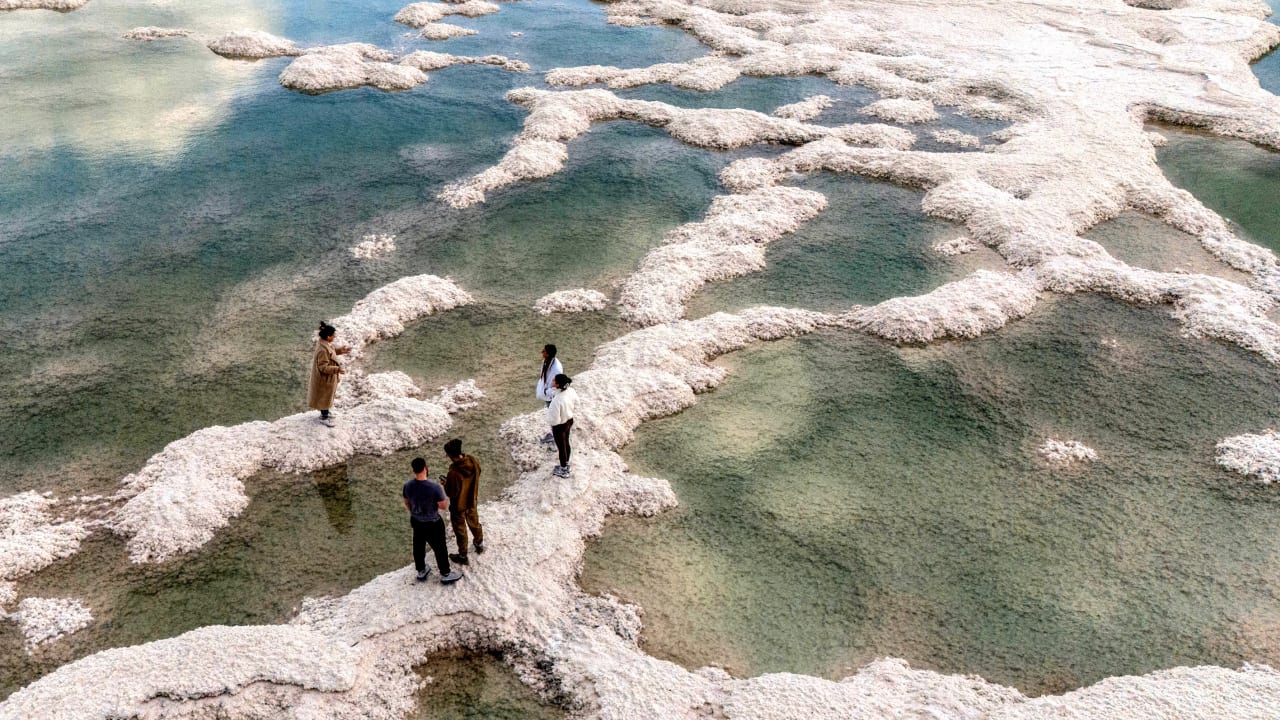
For the cover story, I spent a day in the vicinity of the Dead Sea, the lowest point on Earth. It is an iconic site, not only for Israel and its neighbors – Jordan and the Palestinian Authority – but for the entire world. Yet the environmental disaster that has been unfolding there for decades continues to go untreated.
As the Dead Sea diminishes, with an ever-shrinking shoreline and the appearance of thousands of dangerous sinkholes, a growing number of people are visiting the area to see this new reality for themselves – a kind of grim ecotourism.
In this issue of the Report, Galit Cohen, Israel director of the Jewish Climate Trust, fellow at the Institute for National Security Studies, and former director general of Israel’s Environmental Protection Ministry, writes about the paradox of Israel’s advances in green innovation alongside the country’s lack of critical infrastructure to support it.
Yosef I. Abramowitz, aka Mr. Sunshine, describes how Israel can – and should – do more to harness solar energy, while Jerusalem Post breaking news desk manager Sam Halpern outlines the challenges Israel faces in protecting its key water source, the Kinneret.
Turning more directly to the environmental fallout of the war, Halpern also assesses the environmental damage caused by the conflict on Israel’s northern border and in the Gaza periphery; Dana Ben-Shimon speaks with Gazans about the reality on the ground; Patti Golan explores how the environmental fallout in Gaza spills across the border; and Stephanie L. Freid examines efforts to recognize “ecocide” – the deliberate or wanton destruction of the natural environment in war zones, from Gaza to Ukraine – as a war crime.
Staying global, seasoned journalist Ben Lynfield talks to aid workers helping those fleeing a largely forgotten war in Sudan, while veteran war correspondent Paula Slier shares her perspective on what US President Donald Trump’s recent arrest of Venezuelan President Nicolas Maduro says about media coverage of contentious events elsewhere, especially in Israel and Gaza.
Former Knesset member and expert on Arab affairs Ruth Wasserman Lande examines the events unfolding in Iran, and Institute for National Security Studies (INSS) researcher Abir Gitlin discusses popular sentiment in Israel as a general election looms later this year.
Rounding out the edition, I spoke to Noam Solomon, CEO of groundbreaking biotech company Immunai, which is using AI to map the human immune system and help save lives, and Start-Up Nation Central CEO Avi Hasson shares his insights on where Israel’s innovation ecosystem is headed in 2026.
It’s a packed magazine, but at its heart are the environmental challenges this region now faces as the war begins to wind down. I hope that you will enjoy exploring the issues that impact all of us as much as I have.
– Ruth Marks Eglash