Amid all the chatter about the need to set up an independent commission of inquiry to look into the abject failures of October 7 and learn the lessons – and such a commission should be established – a couple of those lessons are so obvious that no inquiry is really needed to spell them out.
Over the last two days, the state has shown that one such lesson has been learned, but another has not.
Israel learned importance of accountability
First, the lesson learned – and it is an important one.
On Sunday evening, after Israel operated in the heart of Beirut and took out Hezbollah’s military commander, Ali Tabatabai, the IDF’s own chief of staff, Lt.-Gen. Eyal Zamir, told the nation in a pre-recorded message that this is how Israel will now operate: “We will not allow threats to develop; there will be no restraint."
This, indeed, is one of the central lessons of October 7 – the inherent dangers of allowing neighbors hell-bent on your destruction to build up sophisticated capabilities while Israel refrains from acting, absorbing blows that fall just below the threshold of an all-out war for fear of triggering one.

That mindset is what allowed Hezbollah to violate all of its obligations after the 2006 Second Lebanon War and amass an arsenal of 150,000 rockets that would make a small NATO country proud.
It is also the same policy that enabled Hamas to construct an underground fortress in Gaza, fire rockets that damaged property but did not kill, and send incendiary balloons into Israel while elite soldiers were dispatched as firefighters to douse the flames instead of being sent as commandos inside Gaza to put a decisive end to this phenomenon.
This pattern of absorbing blows and reacting in a minor chord did not emerge overnight; it became a habit over the years, a way of managing security challenges in the hope of avoiding a larger confrontation. October 7 shattered that illusion. The policy of absorbing provocations and watching a massive military buildup without responding proved catastrophically misguided.
A year after the ceasefire in the North, as Hezbollah is slowly trying to rebuild and rearm, Israel – as Zamir said – is making sure the enemy understands that what was is not what will be, and that this time Israel will not turn a blind eye when it sees a massive buildup and will not refrain from using deadly force out of a fear that it will lead to a wider escalation. The message is that restraint, when enemies interpret it as weakness, becomes dangerous.
Israel is applying this lesson, to a somewhat lesser degree, in Gaza as well: Hamas ceasefire violations are not overlooked, and attempts to attack soldiers are met with deadly retaliatory force, whether or not Hamas’s attacks “succeed.” Even symbolic attacks carry meaning. Intent matters. And Israel is signaling that the era of indulgence is over.
This is a new mindset – meant to replace the one that held sway on October 7.
One lesson Israel has yet to learn
Now to the lesson not learned.
Zamir began his Sunday night statement not with the strike in Beirut but by discussing the results of the committee he established upon taking office earlier this year, led by Maj.-Gen. (res.) Sami Turgeman, to probe the army’s October 7 failures. This panel went further in its findings and in its recommendations to reprimand those responsible than the committee set up by his predecessor, Herzi Halevi.
“If we do not sharpen the commitments of responsibility, the trust in the system will erode,” he said. “And that trust is our foundation for fighting, winning, and defending the State of Israel.”
Public trust, he stressed, is essential, which is why he initiated the Turgeman follow-up inquiry and recommended ending the service, including in the reserves, of several officers he has known for years and fought alongside but who were culpable for October 7. The willingness to hold friends and colleagues accountable, he implied, is part of leadership. Without accountability, rhetoric about learning lessons is hollow.
Then, all hell broke loose.
Not from the officers facing consequences but from Defense Minister Israel Katz, who immediately undermined Zamir’s authority by declaring that he does not accept the findings of the Turgeman Committee – the very committee Zamir had set up – and that he would establish yet another committee, this one headed by the Defense Ministry’s comptroller, to review those conclusions.
This new committee – tasked chad-gadya-like with reviewing the work of the Turgeman Committee, which itself was established to review the original panel set up by Halevi – is supposed to complete its work within 30 days. In the meantime, several top IDF appointments, including the heads of the air force and navy and the military attaché to Washington, would be frozen.
Zamir, feeling his authority eroded, fired back, saying Katz’s move was “puzzling” and that delaying appointments harms the IDF’s preparedness at a very volatile time.
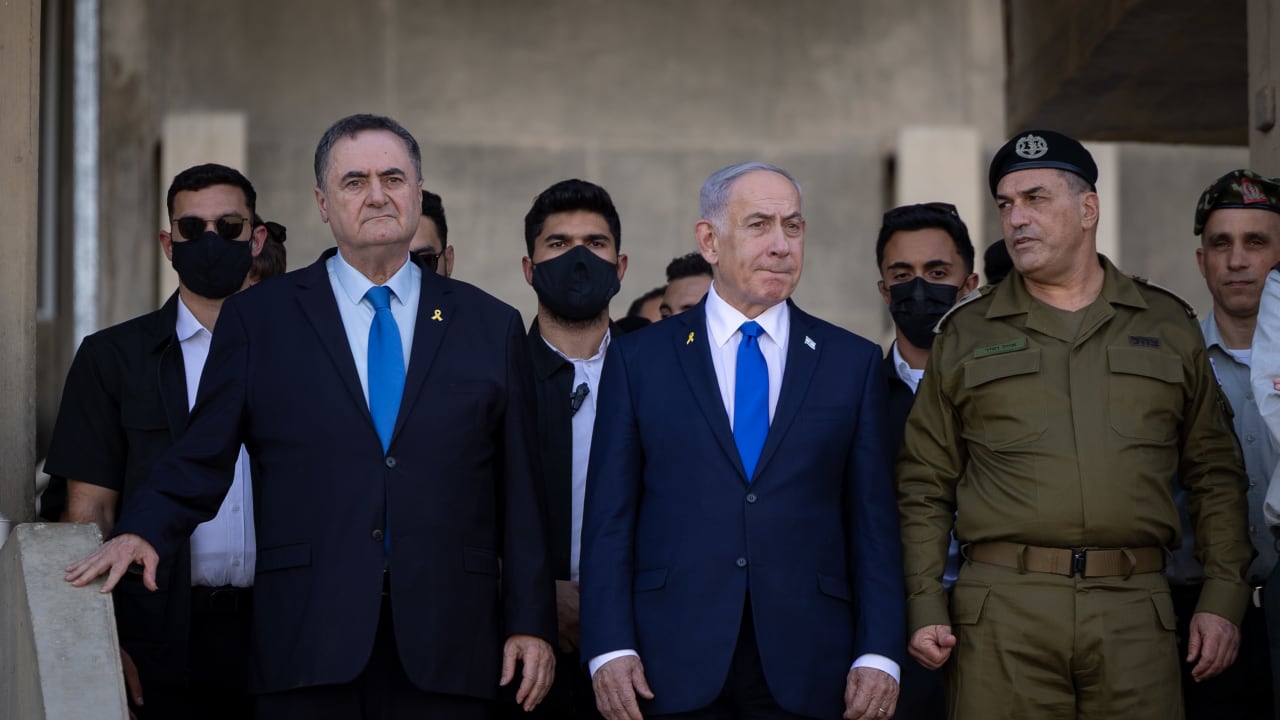
In other words, a slugfest emerged between the defense minister, representing the political echelon, and the chief of staff, representing the army. And a very public one at that.
Sound familiar? It should. It is reminiscent of the very public and toxic disagreements between government politicians and IDF generals on the eve of October 7 over judicial reform – disputes about how that turmoil was weakening Israel in the eyes of its enemies and over whether the generals did, or did not, respond appropriately to various calls at the time for reservists to refuse to serve.
The open disputes at that time weakened Israel in the eyes of its enemies and suggested an ailing system whose will to fight had diminished. The corrosive dynamic of generals accusing politicians of reckless behavior and politicians accusing generals of insubordination radiated weakness and disunity far beyond Israel’s borders.
It has since become widely accepted that this internal bickering between the army and the government contributed to the miscalculations of Israel’s enemies. One of the clearest lessons of October 7 – a lesson no commission is needed to articulate – is that such public friction between politicians and generals is dangerous and must not continue.
KAN diplomatic correspondent Gili Cohen noted that during recent negotiations with Hamas, the enemy took comfort whenever it sensed “daylight” between Israel and the United States regarding the hostage negotiations.
If that daylight emboldened Hamas, she said, imagine the impact of daylight between Israel’s political and military leadership. For enemies watching closely, even small cracks can look like seismic fissures.
There will, obviously, be disagreements between the military and the political echelon. In a democracy, those differences are even important. The political echelon is not – and should not be – a rubber stamp for every military recommendation. Israel is a state with a military, not a military with a state.
Still, those disagreements must be managed adroitly and discreetly – behind closed doors – so as not to give the dangerous impression that Israel’s command structure is fraying. Such a mistaken impression has consequences: It invites miscalculation, emboldens adversaries, and creates precisely the kind of strategic blindness that proved so fatal two years ago.
If October 7 taught us anything, it is that Israel cannot afford enemies who underestimate its strength, nor leaders – both political and military – who underestimate the price of looking divided.