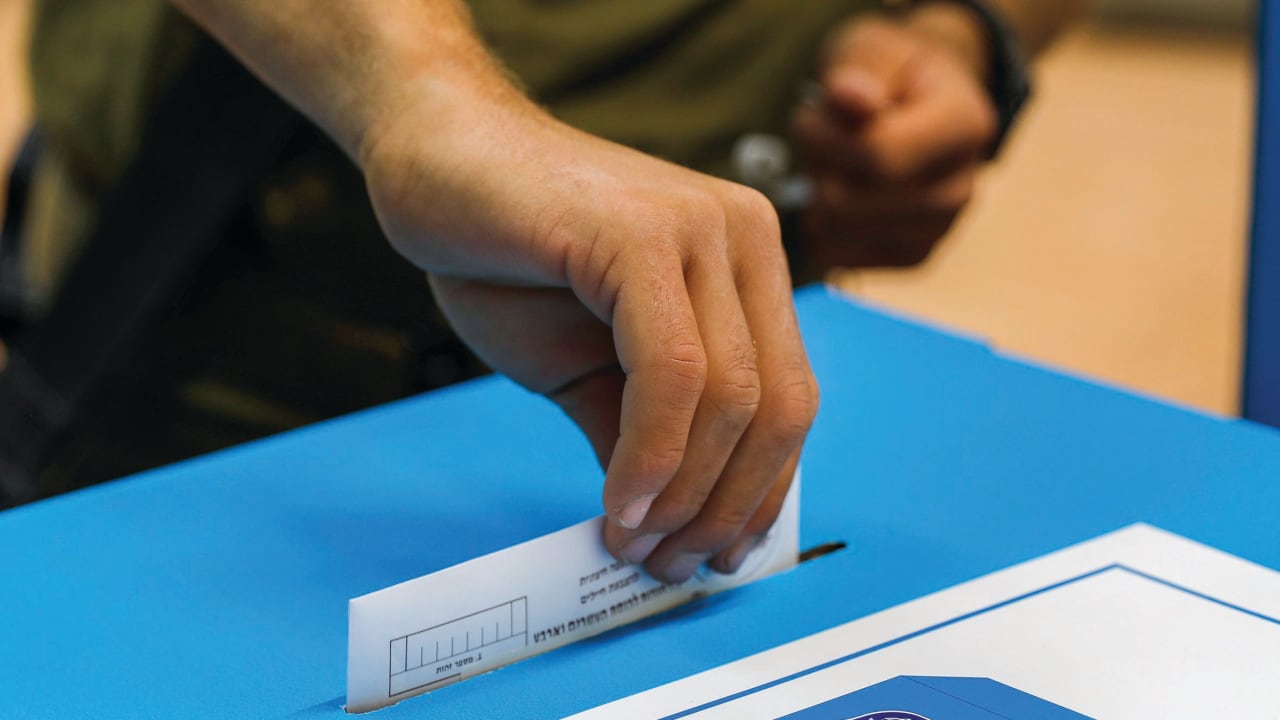
If you are at least 17 years old, a resident of one of the following 10 neighborhoods in Jerusalem and above all – if you feel you know what should be done to improve residents' quality of life – then this might be very important.Elections are scheduled for East Talpiot, Kiryat Yovel, Har Nof, Beit Hakerem, Zur Baher, Neveh Yaakov, Romema, Beit Hanina and – at least according to the primary program – the two councils of Ramot: one for the general public and the other for the haredi sector. However, due to the opposition of haredim in the neighborhood to separate elections (and promoted by their representatives at city council), it seems both councils in Ramot will skip these elections.The rules of local council elections state that in each board for each council there will be nine elected representatives from residents of that neighborhood and six additional members that represent several bodies: the municipality, the Society for Local Councils and Community Centers, in the Jewish neighborhoods the Jewish Agency, the neighborhood administration, the neighborhood planning administration (part of the Master Plan for construction), the city education administration (Manhi) and the city welfare and community administration. From among the nine representatives, a chair is elected and then all work together to decide the neighborhood's central needs and plan for them.Following is an overview of some of the neighborhoods in question:
East Talpiot
Created in 1974, this neighborhood has 19,000 residents. Some 4,545 of them are olim; 18% are “young families” (a relatively low figure compared to the city’s average of 33.5%) and 3,445 are students at all grade levels, accounting for 2.4% of city students. About 64.5% of residents live in their own homes. One of the top issues: a drive to preserve the “Mitzpetel” – the Turmus Hill panorama.
Yuvalim – Kiryat Yovel
This neighborhood is comprised of 42,627 residents. 6,332 of them are olim, mostly from France, the FSU and US. 24% are young families and there are 9,219 students at all grade levels. 64.5% of residents own their homes. The local council includes all parts of Kiryat Yovel, and Ramat Dania, Ramat Sharett and Malha. For many years, some parts of Kiryat Yovel comprised the lowest socioeconomic segment of the city’s Jewish residents but in recent years, a large number of olim, primarily from France, arrived and bought the apartments in the most distressed streets and gentrified that part of the neighborhood. A significant majority of residents are Orthodox, many of them haredim. Kiryat Yovel has experienced tension between haredi and pluralist residents, and these elections highlight this, striving to reach a status quo between the parties.
Beit Hakerem
This is the neighborhood probably most identified with the narrowing footprint of secular residents in Jerusalem. Seculars live in all the non-haredi neighborhoods, but the residents of Beit Hakerem have been at the forefront of many struggles on religious issues. With 18,505 residents, 2,029 of them olim, only 19% young families, 3,397 students enrolled in all grades and 63% owning their own homes, this is one of the wealthiest neighborhoods of the capital. Beit Hakerem succeeded in quite a few battles to save the special character of the neighborhood, like the cancellation of a plan to open a haredi maternity recovery home, and the opening of the old committee house and transforming it into a community coffee shop and pub, despite an attempt led by haredi representatives at city council to prevent its opening on Shabbat. Residents are concerned about large construction plans – mostly with towers, which locals want to prevent or at least limit in height.
Har Nof
This is a haredi neighborhood with 18,383 residents, including 2,807 olim mostly from the US, Britain and France. 29% of the residents are young families and there are 4,388 students in all grades. 74% of the residents live in their own properties and the most famous families here are the members of the Shas movement, including party chairman and Interior Minister Arye Deri.
Neveh Yaakov
The neighborhood beyond the 1967 Green Line has 28,606 residents, 3,554 of them olim, mostly from the FSU and Ethiopia. 43% are young families, compared to the city average of 34%. The number of students in all grades is also one of the highest in Jerusalem: 7,875 (5.5% of the city’s students). This is also one of the neighborhoods with the highest percentage of residents living in their own properties: 73%. About a quarter of residents are 6 or younger; about half are 0 to 18 years old, making it one of Jerusalem's youngest neighborhoods. Neveh Yaakov was not intentionally built for religious or haredi residents but today has become a very religious neighborhood with a substantial majority of haredim.
Romema
This is one of the largest neighborhoods in the city, with 41,434 residents – 3,164 of whom are olim, mostly from the US, Britain and Belgium. 37% are young families (just slightly above the city average) and there are 12,283 students in all grades – most of them in haredi schools and yeshivot. Only 57% of the residents here own their homes. A construction boom for housing meeting the requirements of haredim has contributed to this high figure of residents, and that includes all the haredi streams – Lithuanian and Sephardi – living in all parts of the neighborhood without any separation between the different streams.
Zur Baher
Zur Baher has 50,767 residents; half are young families, and 13,744 of the children are students at all grade levels. They study in public schools supervised by Manhi or in private schools in the Islamic or Christian streams. 78.5% of the residents own their homes.The local council includes three neighborhoods – Zur Baher, which is more a village on the southeast side of the city, Um Lison and Um Tuba. Most residents belong to 15 families but about 20% of them came from neighborhoods beyond the security barrier, seeking housing inside the city. The local council came into existence in 2009, and in 2017 it started to operate as an independent association rather than as a branch of a local council from a Jewish neighborhood. The major issues at stake are construction permits and lack of classrooms.
Beit Hanina
With 90,226 residents, this is the biggest Arab neighborhood in the city. 41% are young families with 21,068 students in all grades, and 54.5% of the residents own their properties. As in most Arab neighborhoods in the capital, a major problem is the lack of construction permits, and hence there is a high incidence of illegal construction leading to demolition orders. A large percentage of residents are considered wealthy and many are employed on the Jewish side in various professions – including healthcare in city hospitals.