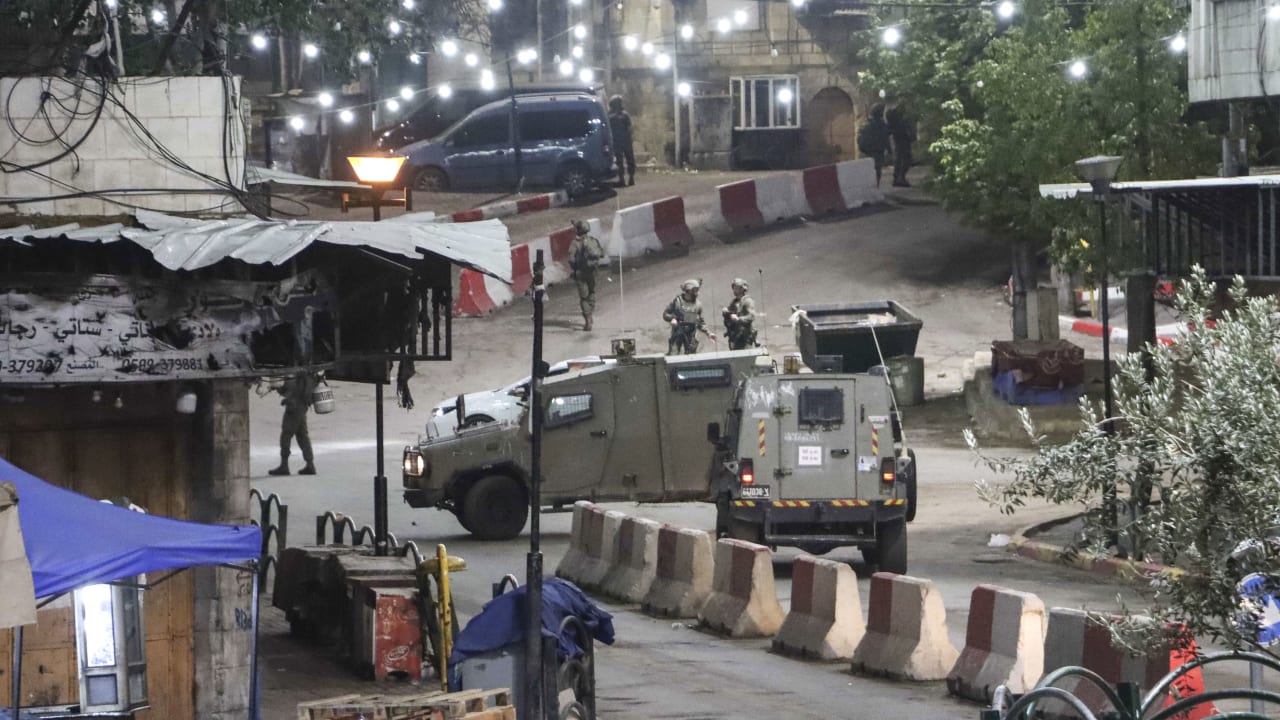
Calm has returned to Hebron’s southern neighborhoods after several days of an intense IDF operation to restore order, following a wave of internal violence between rival Palestinian clans in the area.
With the curfew lifted and Israeli security forces withdrawn, some Palestinian residents now say they believe armed men will be more cautious before turning to weapons in this chaotic part of the city, known for shootings, criminal activity, and violent family feuds.
Several Hebron residents argued that the recent Israeli crackdown in the city has sent a message to anyone carrying weapons that they can no longer simply use them in clan disputes. “People with weapons will now think twice before pulling the trigger in family quarrels,” said Amjad, who lives near Jabal Johar neighborhood, the area where the Israeli security forces operated.
“Before the raid, anyone with a gun would just fire without thinking too much during a quarrel with rivals,” Amjad said. “Now, gunmen will be more hesitant.”
The Israeli operation, Amjad told The Jerusalem Post, may increase deterrence at least in the short term, as clan leaders are now more aware of the consequences of failing to prevent violence.

Recent surge in clashes between Palestinian clans prompted IDF op.
He explained that there is concern that if daily clashes between Palestinian families break out again on a large scale, southern Hebron could end up like the Jenin refugee camp.
“People saw what happened in Jenin and Tulkarm, and fear the same will happen here as well,” Amjad explained, referring to large-scale IDF counter-terrorism operations in the northern West Bank over the past two years. These military operations were carried out to fight Palestinian militias operating from densely populated areas in Jenin and Nur Shams refugee camps. Targeting the terrorists also led to Palestinian residents evacuating their homes in these areas.
The Israeli crackdown in Hebron was completed a few days ago. “Security forces searched 350 buildings, arrested 14 individuals involved in terrorist activity, and possession of weapons including M16 rifles, pistols, and dozens of knives and other offensive arms,” the IDF spokesperson’s unit said in a statement.
The operation, according to the IDF, “was aimed to thwart terror infrastructures, seize illegal weapons, and enhance security in the area.”
However, Hebron residents said that what prompted the Israeli raid was a recent surge in clashes between Palestinian clans in the Jabel Johar neighborhood, which is near Kiryat Arba and the Jewish settlement in Hebron. Shootings, attacks, and setting fire to property have intensified there lately, especially within the Rajabi family, claiming the life of a young man and injuring others.
According to residents, the Israeli forces retreated after clan leaders gathered and “reached understandings to resolve future problems between individuals and families through legal means, using lawful arbitration, without resorting to weapons.”
Sources noted that representatives of several families offered to “take measures against any member who acts independently or takes the law into their own hands, including turning to the Palestinian police for assistance.”
“We are happy that the Israeli forces pulled out and that we can go back to normal life now,” Munir, another Hebron resident, told the Post.
He and other Palestinians said the real test of whether the understandings between clan leaders will hold will come during Ramadan, which is set to begin in about three weeks.
They pointed out that last year’s Ramadan was tense and full of violent attacks. “We’ll see during this Ramadan if clashes are really over,” they said. “Only time can tell.”
“Family feuds brought the Israeli army into the city, imposing strict measures that led to businesses and institutions shutting down and restrictions on movement,” Munir said. “The economy has suffered enough. Many people who have nothing to do with these disputes paid the price,” he continued. “We shouldn’t give the Israeli army any excuse to enter the city. Violence and crime should stop.”