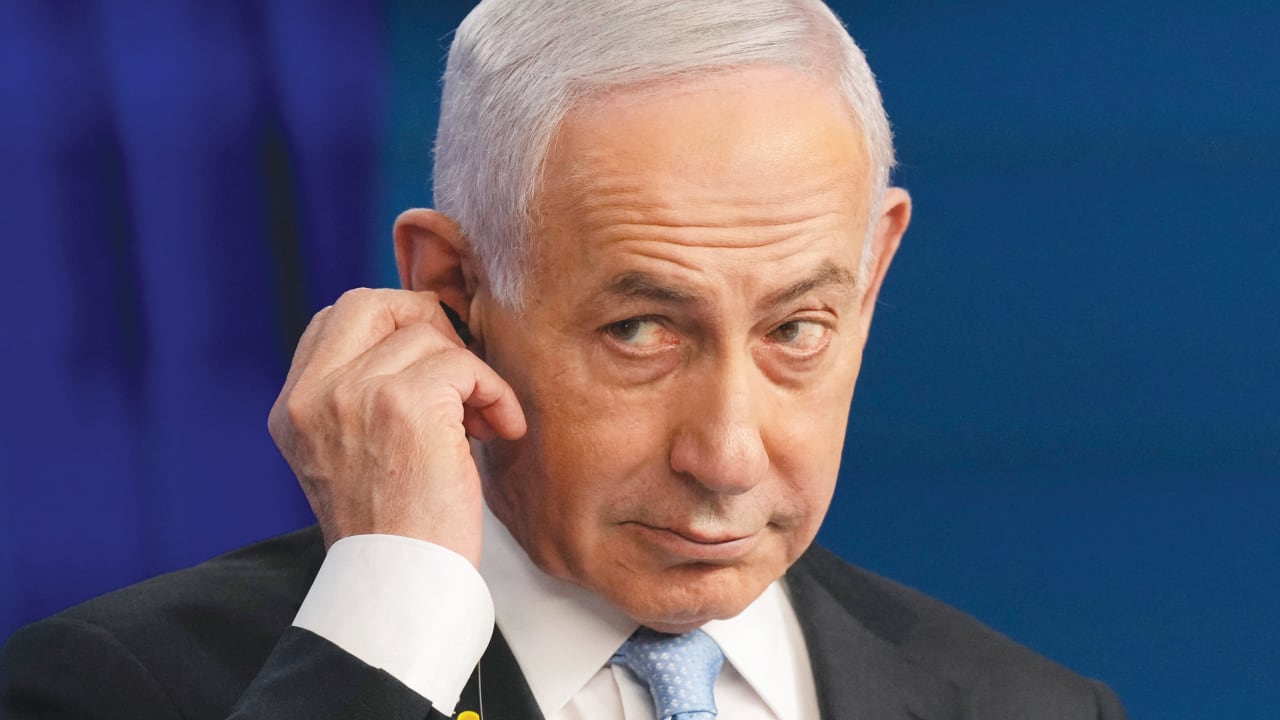
Prime Minister Benjamin Netanyahu on Wednesday rejected claims that he directed favorable coverage on the Walla news site, clashing repeatedly with the prosecution as his testimony in Case 4000 continued at the Tel Aviv District Court.
The case – also known as the Bezeq-Walla affair – centers on allegations that Netanyahu granted regulatory benefits to Bezeq controlling shareholder Shaul Elovitch in exchange for positive and interventionist coverage on Walla.
Netanyahu is charged with bribery, fraud, and breach of trust, allegations he has consistently denied.
During questioning by prosecutor Yehudit Tirosh, the focus turned to a series of coverage incidents from March 2016 involving Meni Naftali, the former caretaker of the Prime Minister’s Residence, who had previously sued the state and later faced – and was cleared of – sexual harassment allegations.
According to the indictment, Netanyahu’s then-spokesman Nir Hefetz conveyed requests to Elovitch and Walla CEO Ilan Yeshua to prominently publish articles related to the allegations against Naftali, including a post by then-MK Miri Regev and a letter sent by five Likud lawmakers to the attorney-general criticizing the closure of the case.

Netanyahu accuses Hefetz of tailoring testimony
Netanyahu acknowledged that he wanted the issue “advanced” but denied directing anyone to approach Walla or dictating how the story should be handled. “I did not give instructions, and certainly not instructions to send anything to Walla,” Netanyahu testified. “I said only that this was an important issue and that it should be promoted.”
Tirosh pressed Netanyahu on whether media messaging routinely passed through him, citing Hefetz’s testimony that it was “rare and exceptional” for anything related to Naftali not to reach the prime minister. Netanyahu rejected that account, accusing Hefetz – now a state witness – of tailoring his testimony.
“I had no such directive,” Netanyahu said. “I don’t remember giving any instructions. Hefetz shows what is convenient for him.”
Tirosh presented text messages sent by Elovitch to Yeshua around 10 p.m. on the night the articles were published, in which Elovitch wrote that the matter was “very important to him” and urged Walla’s management to “ensure a good result.”
She argued that these messages reflected not only Hefetz’s involvement, but also Elovitch’s understanding – based on direct conversations – that the issue was personally important to Netanyahu.
Netanyahu confirmed that Elovitch knew the matter mattered to him but disputed the prosecution’s broader conclusions.
“From conversations, yes,” Netanyahu said. “But that doesn’t mean there was anything unusual.” He repeatedly emphasized that similar stories appeared in other media outlets and framed the coverage as part of a broader public discussion about sexual harassment.
Tirosh also confronted Netanyahu with messages in which Hefetz praised the published article and told Yeshua that he had “reported everything, twice,” a phrase Hefetz later testified meant he updated both the prime minister and his wife, Sara. Hefetz subsequently asked that the messages be deleted.
Netanyahu denied any knowledge of such communications. “I had no idea about these connections,” he said. “I don’t know what was behind this.”
When asked whether there was something improper or embarrassing about such contacts that would justify deleting messages, Netanyahu replied that Hefetz’s conduct was his own.
The court also examined an earlier 2014 incident in which Netanyahu allegedly asked Elovitch to remove an article concerning a lawsuit filed against him and his wife. Prosecutors noted that Netanyahu spoke with Elovitch close to 11 p.m., after which Elovitch contacted Yeshua regarding the article.
Netanyahu acknowledged that he occasionally contacted publishers regarding coverage but described such instances as rare and routine across the political spectrum. “Everyone asks to remove articles. It happens all the time,” he said, naming other media figures and outlets. “What’s unusual here is how infrequent it was.”
Tirosh challenged Netanyahu on why, if Walla was as marginal as he has claimed, he would intervene at such a late hour.
“What does it matter to you what happens at 11 p.m. on a marginal website?” she asked.
Netanyahu responded sharply, saying the question was inappropriate. “You don’t ask a prime minister questions like that,” he said, adding that his work style involved handling many matters rapidly and simultaneously.
Proceedings were briefly interrupted when Netanyahu left the courtroom during objections and returned late, with his office later stating that he had been on the phone with representatives of the Jewish community in Sydney following the deadly terrorist attack at Bondi Beach.
Throughout the hearing, Netanyahu argued that the prosecution was inflating isolated incidents into a narrative of systemic media control.
“Out of 15,000 articles, you pull out 315 events and call them ‘exceptional,’” he said. “This shows the opposite.”
He also criticized investigators for failing to compare his alleged interventions with contacts politicians routinely have with other media outlets.
The trial is expected to continue next week.