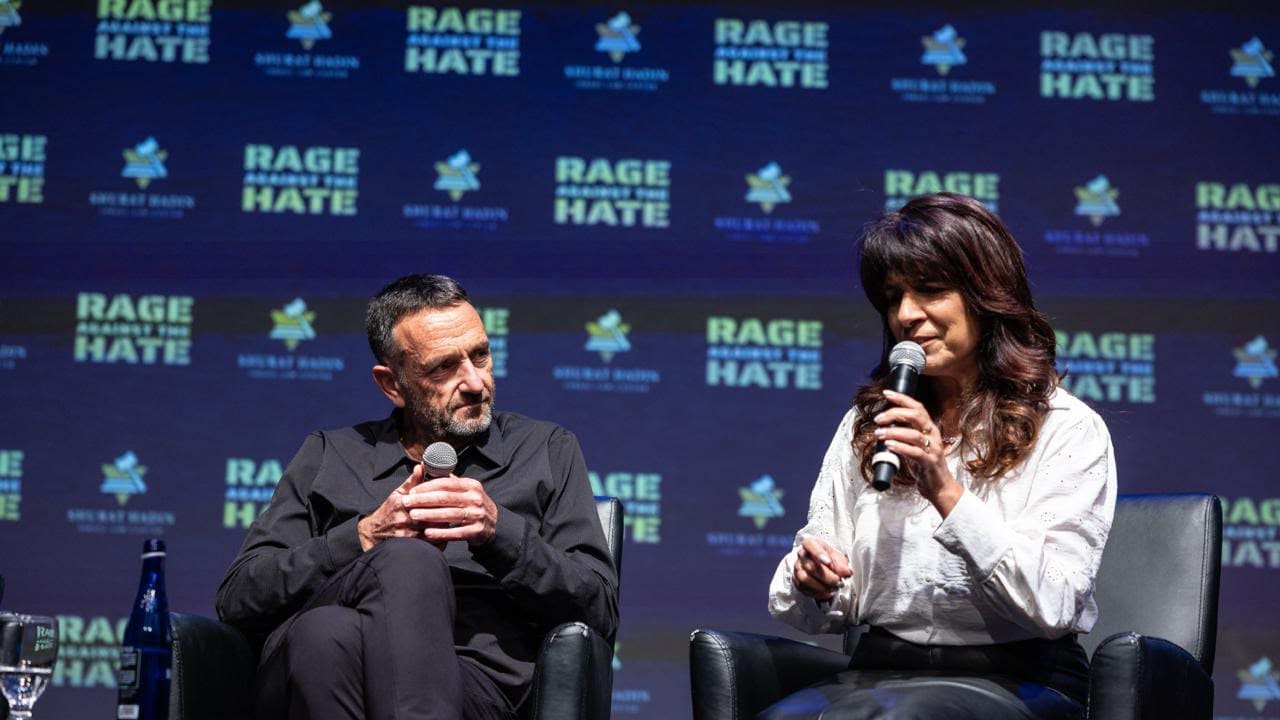
Former IDF chief of staff Herzi Halevi spoke publicly on Sunday for the first time since leaving his position in March 2025, asserting that "October 7 was a preventable failure,” but there was no betrayal from within the political echelon or defense establishment.
Halevi explained that he does not believe that any individual who spent decades serving the State of Israel would decide to help Hamas carry out a terrorist attack.
“Furthermore, from a practical standpoint, aiding Hamas would require not just a single collaborator, but an extensive network. Yet, even after three years, not a single such person has been found,” he continued.
Halevi also advocated for the establishment of a State Commission of Inquiry into the security failures surrounding the October 7 massacre as part of the national healing process.
He urged the state to ask difficult questions and face the failures head-on, saying such an investigation is the only way to prevent similar security lapses in the future.

Halevi reflects on mistakes made in early days of Gaza war
When asked whether he believes absolute victory over Hamas is possible, Halevi acknowledged that mistakes were made in the aftermath of October 7 as the IDF tried to figure out the best way to combat Hamas and bring Israeli hostages home.
Despite the mistakes, Halevi posited that conducting a ground maneuver and asserting a heavy military presence in Gaza, Israel may not have been able to eventually bring all of the hostages home.
Reflecting on the IDF’s priorities before October 7, Halevi noted that Iran was the first priority, Hezbollah was the second, and Hamas was the third because the military was unaware of what Hamas was planning.
“The prevailing view within the IDF, the Shin Bet (Israel Security Agency), and the political echelon was that Hamas did not want war,” Halevi explained. “Hamas invested significant effort into leading us to this assessment.”
Halevi lamented the State of Israel being caught by surprise on the morning of the attack in a speech at Shurat HaDin’s New York conference on combating antisemitism.