

Two controversial residential building projects, in the works for years, have been approved by the Jerusalem District Planning Committee headed by Shira Talmi Babay.
One is the multistory Epstein Tower opposite the Mount Herzl Military Cemetery. The other is a spacious building on the corner of Agron and Keren Hayesod streets that will be torn down to make way for a much larger residential project. The building, Amir House, will be replaced and renamed the Agron Tower.
It’s not certain whether the developer chose the name in memory of former Jerusalem mayor Gershon Agron, who founded The Jerusalem Post (which was originally called The Palestine Post), or simply took the name from the local street. There was strong resistance from the residents, some of whom had lived in the building for half a century or more.
The site, one of Jerusalem’s best, is next door to a pizza parlor and the city’s first supermarket; adjacent to Independence Park, within easy walking distance of all types of synagogues; a bank; two mini-markets; public transport; and a 10-minute walk from Mamilla Mall and the Old City.
There will be a modicum of continuity in the Agron Tower, in that one of its three architects is Baruch Reznik, whose father, David Reznik – one of Israel’s leading architects – designed Amir House. The new 30-story project will include 110 residential units, 114 hotel rooms, and two commercial floors.
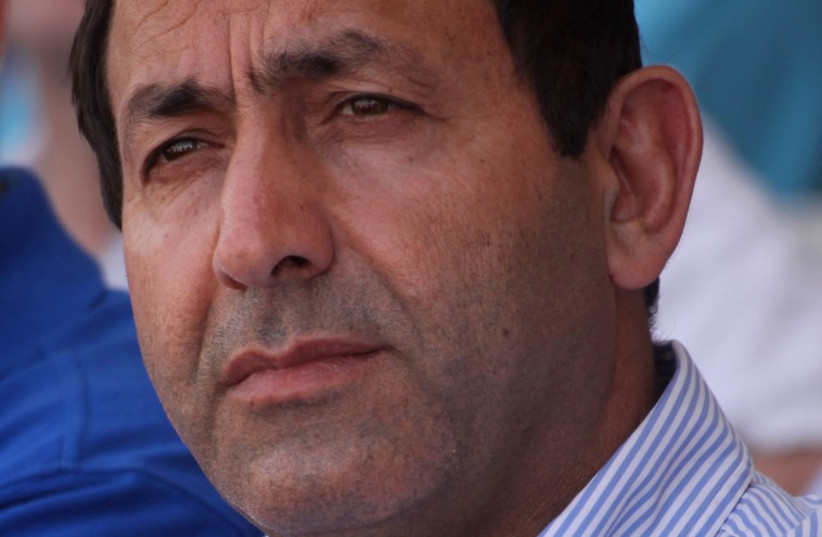
Challenge and opportunity walk hand in hand in the life of Rami Levy. He’s come a long way since his business began in the Mahaneh Yehuda market, and he keeps spreading his wings. His newest venture is a pop-up Korean cosmetics store in Petah Tikva, believed to be Israel’s first of its kind. Located in the Ofer Mall, the K-Beauty store was launched with an investment of NIS 200,000.
If Korean cosmetics are as successful in Israel as they are abroad, it’s a safe bet to say that Levy will set up a chain of such stores throughout the country, just as he has done with his supermarkets.
Jerusalem municipality calls for more female leadership
The municipality is calling for nominations of Jerusalem-based female leaders who have made significant breakthroughs in public service within society at large, their own communities, or in education, culture, and the environment.
Nominations will be accepted up to September 6, after which they will be reviewed by Mayor Moshe Lion and his senior adviser Inbar Lazar, who heads the selection committee for the Mayor’s Prize for groundbreaking women. Details on nominations can be found on the municipal website or by calling Or Buzaglo at (02) 629-7367.
At this time of the year – often referred to as the cucumber season because it’s so bland – many synagogues are depleted. But last Saturday, Hazvi Yisrael’s main chamber had many more congregants than previously. The Talbiyeh synagogue has several services at staggered times to suit different groups of congregants. In view of the fact that last Saturday was the last before the month of Elul, the two most veteran congregations came together in the main chamber.
In addition, there was a bridegroom, Naftali Wachsman, whose relatives in Israel were joined by those of bride Tamar Berger, and other family members who flew in from New York to hear him lead part of the service and to later attend the wedding. What was amusing at the kiddush that followed the service was to see how many people made a beeline for the cholent and the potato kugel, as if it were winter instead of summer.
Diaspora Jews tend to know about those they live amongst
North African Jews, when living in Muslim-majority countries, knew a lot about Islam. Jews living in Christian-majority countries knew a lot about Christianity and could sing Christmas carols by heart. But it’s doubtful that Jews living in Israel know much about the various minorities who also live here – Muslims who are multigenerational, such as the Nusseiba, Nashashibi, and Husseini families, or the various Christian denominations of the Eastern, Catholic, and Protestant Churches, or even the Jews for Jesus.
Most members of Jewish communities stay within their own circles, though they may occasionally visit the synagogue of another denomination to join in bar mitzvah or wedding ceremonies hosted by relatives or close friends.
It is fairly well known that during the Spanish Inquisition, many Jews were forced to convert to Christianity. Less is known about Jews who were forced to convert to Islam.
Among the Palestinians, for instance, there are families who practice certain Jewish customs handed down through generations, without the present generation knowing the origin of these customs.
But there is one very famous convert to Islam about whom there is currently an exhibition at the Islamic Museum on Hapalmah Street.
The exhibition was curated by Dr. Hadar Feldman Samet, a senior researcher and lecturer at Tel Aviv University, whose main focus is on Jewish literature, culture, and history during the Ottoman era.
Shabtai Zvi was a 17th-century rabbi who was forced to convert and who regarded himself as the Messiah. He also managed to assemble a group of several hundred followers, whose descendants today live in Turkey.
The exhibition is called “Truth or Lie,” with viewers invited to draw their own conclusions. Guided tours of the exhibition are held from Monday to Saturday.
Fans of the late Israeli singer Shoshana Damari should mark September 4 in their calendars. That’s when a tribute will be paid to her at the opening of the Tema Festival at the Jerusalem Theater to mark the 20th anniversary of her death.
Damari, who was born in Yemen 103 years ago, was only 15 months old when her family arrived in Rishon Lezion. Her musical talent was evident from a very early age, and she was 15 when she first performed on the radio as a soloist.
Though diminutive in size, Damari had a strong, deep, husky, dramatic voice and Yemenite pronunciation. The song most associated with her is “Kalaniyot” (anemones), which her family sang around her deathbed.
Throughout her career, she frequently toured abroad and was known as the Queen of Israeli Music.
Another well-known Yemenite singer, Gila Bashari, born into a Yemenite family in Israel, will sing some of Damari’s greatest hits; film clips will feature Damari herself.
greerfc@gmail.com