
Prime Minister Benjamin Netanyahu and Shaul and Iris Elovitch asked Attorney-General Gali Baharav-Miara on Wednesday to state whether the prosecution will withdraw the bribery charge in Case 4000, arguing that they cannot properly plan the remainder of the defense case while the question remains unresolved.
The request follows the Jerusalem District Court’s June 29 clarification that, even after hearing Netanyahu’s testimony and cross-examination, its position from three years earlier “remains unchanged.”
In June 2023, Judges Rivka Friedman-Feldman, Moshe Bar-Am, and Oded Shaham said there were difficulties in proving the bribery offense in the first count of the indictment, concerning Case 4000, and suggested that the state consider withdrawing the charge.
The prosecution rejected that assessment at the time, saying the judges had heard only part of the evidence and that further issues were expected to emerge during the defense case.
Netanyahu and the Elovitches’ lawyers argued Wednesday that the court’s renewed statement strengthened its original position because it was issued after the prosecution had completed presenting its case and Netanyahu had undergone both direct and cross-examination.
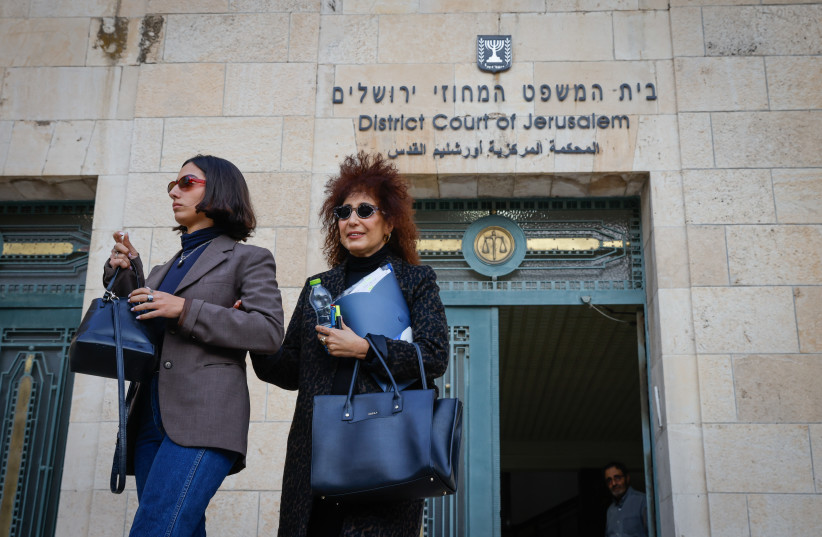
Baharav-Miara's decision has immediate consequences, Netanyahu attorneys argue
The judges’ comments did not amount to an order to withdraw the charge or a finding that Netanyahu should be acquitted. Unless the prosecution withdraws it, the bribery allegation remains before the court and will ultimately be decided as part of the verdict.
However, attorneys Amit Hadad and Jacques Chen argued that Baharav-Miara’s decision has immediate consequences for which witnesses and evidence the defense must present.
In a joint notice filed with the court, the lawyers said a decision to withdraw the bribery allegation would substantially affect the plan for the remainder of the proceedings, particularly as the court prepares to expand the trial schedule to five hearing days a week beginning in October. Hadad represents Netanyahu, while Chen represents Shaul and Iris Elovitch.
If the bribery charge remains, Hadad has previously told the court, Netanyahu’s defense may seek to call hundreds of witnesses. Its withdrawal could substantially narrow the remaining case, although Netanyahu would continue to face fraud and breach of trust allegations in Case 4000, as well as the charges against him in Cases 1000 and 2000.
Because the defendants have already formally answered the indictment, a prosecution decision to withdraw the bribery charge at this stage would result in their acquittal on that allegation. The remaining charges would continue.
The filing was submitted ahead of a case-management hearing scheduled for September 6, at which the parties are expected to address how the defense case will proceed.
The court said on July 20 that the parties had not yet presented a sufficient plan for continuing the trial in its current format and reiterated that hearings would be held five days a week beginning in October.
Hadad and Chen argued that the absence of a prosecution response to the judges’ position was preventing them from preparing such a plan.
That is the defense’s interpretation of the scheduling decision. The judges did not expressly make the five-day schedule dependent on Baharav-Miara deciding whether to retain the bribery charge.
“If this position is not received promptly, it will make it very difficult for the parties to prepare efficiently and effectively for the continuation of the proceedings,” the lawyers wrote.
They also cited the late Supreme Court president Miriam Naor’s writing on the obligations of state prosecutors, including her statement that a prosecutor’s objective is not to win a case “at any cost” and must include reconsidering a case when the evidence presented in court does not support the state’s original assessment.
The demand for an answer from Baharav-Miara comes as Netanyahu’s defense has itself still not responded to a separate proposal from President Isaac Herzog to explore an agreed resolution to the trial.
Herzog’s legal adviser invited the defense and prosecution on April 28 to enter preliminary talks toward a possible agreement before the president decides on Netanyahu’s pending pardon request. Both sides were asked to respond by May 3.
Baharav-Miara and State Attorney Amit Aisman responded by the deadline, saying the prosecution was prepared to enter talks without preconditions and without delaying the criminal proceedings.
The Jerusalem Post understands that Netanyahu’s defense has still not submitted a response, 80 days after the deadline and nearly three months after the invitation was issued.
Herzog publicly urged the defense in May to join the process, saying that once one side had agreed to enter the room, he expected the other side to do so as well.
What is the Bezeq-Walla affair, officially known as Case 4000?
Case 4000, also known as the Bezeq-Walla affair, concerns allegations that Netanyahu advanced regulatory measures benefiting Bezeq, then controlled by Shaul Elovitch, in exchange for unusually favorable and responsive coverage from the Walla news site, which Elovitch also owned.
Netanyahu and the Elovitches deny wrongdoing.
The bribery allegation, the most serious charge Netanyahu faces, applies only to Case 4000. Netanyahu is also charged with fraud and breach of trust in Cases 1000, 2000, and 4000.