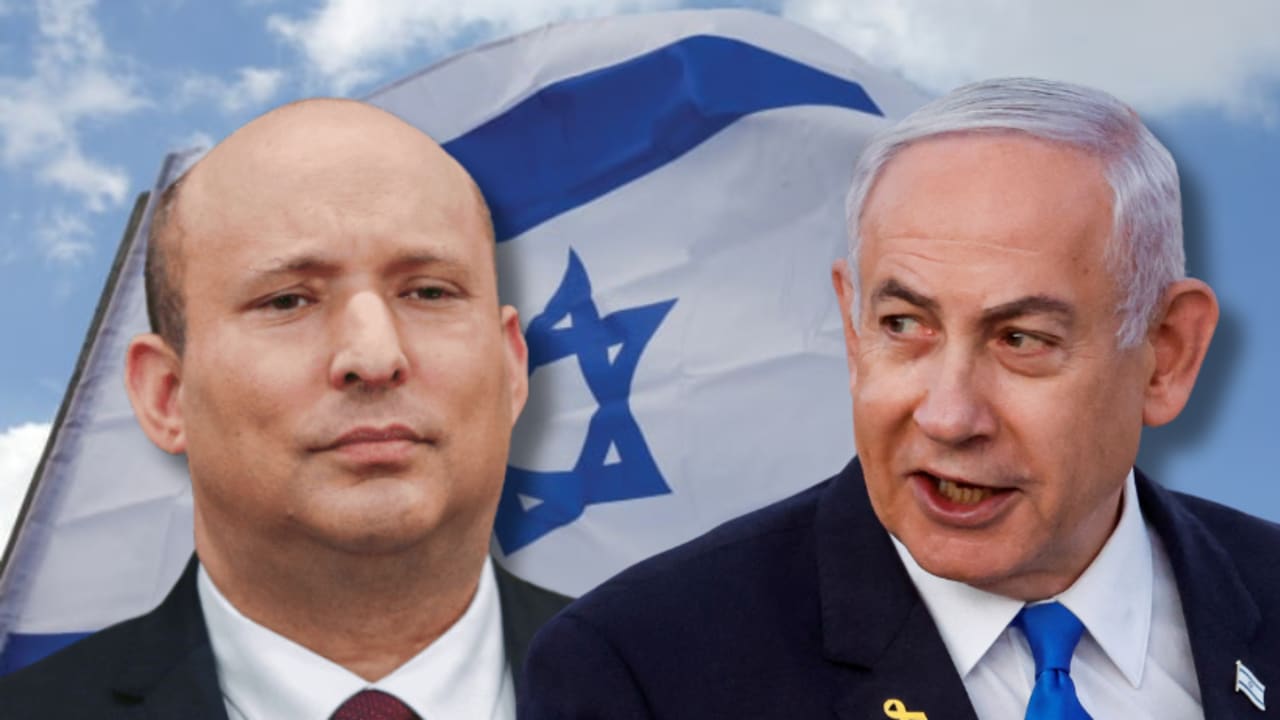
As Israel faces political turbulence and continued security uncertainty over the confrontation with Iran, a KAN 11 poll published Tuesday night found that a united Naftali Bennett-Yair Lapid political framework is the only party currently positioned to challenge Prime Minister Benjamin Netanyahu’s Likud.
According to the poll, Likud, led by Netanyahu, would receive 26 seats, while Bennett’s Together Party, which has merged with Lapid, would win 25. Just behind them is the figure Bennett and Lapid had strongly sought to bring into their ranks: former IDF chief of staff Gadi Eisenkot.
The poll was published amid a political storm that intensified Tuesday, after it emerged that Netanyahu had pushed to advance legislation extending military service without also advancing the haredi enlistment bill. Haredi parties viewed the move as a breach of coalition understandings and as grounds to begin the process of dismantling the government.
The dispute centers on the long-stalled haredi draft legislation, one of the most sensitive issues facing the coalition. Ultra-Orthodox parties have demanded a law regulating the status of yeshiva students, while the government’s effort to move forward with an extension of mandatory service, without resolving the haredi draft issue, deepened tensions inside the coalition.
For the haredi factions, the sequence of legislation was the central point of contention. Advancing a bill that lengthens service for those already serving, while leaving the enlistment issue unresolved, was seen as violating the political balance Netanyahu had sought to maintain among his coalition partners.
Likud coalition stability shaken by haredi threats
The latest crisis sharpened the political stakes reflected in the KAN 11 poll. Although Likud remains narrowly ahead of Bennett and Lapid’s joint party, the numbers show how fragile Netanyahu’s position could become if the haredi parties escalate their threats and the opposition continues to consolidate.
For Netanyahu, the risk is twofold: a tightening electoral map and an increasingly unstable coalition. Even before any formal move to dissolve the Knesset, the dispute over military service has exposed how dependent the government remains on resolving an issue that has divided Israeli politics for years.