
IDF veterans who were born before the state’s establishment and who fought in the Six Day War, which resulted in the reunification of Jerusalem, will have double cause to celebrate next week.
Jerusalem Day festivities, which are held in accordance with the Hebrew calendar, coincides with the universal calendar date of May 14, the date in 1948 when the sovereign State of Israel was declared.
As always, some newspapers will feature the famous photograph of three reservist paratroopers, Zion Karasenti, Yitzhak Yifat, and Haim Oshri, gazing in awe at the Western Wall soon after their commander Motta Gur had announced “The Temple Mount is in our hands.” Year after year, the trio and photographer David Rubinger were invited to Jerusalem Day ceremonies, but time takes its toll. Rubinger, an Israel Prize laureate and former photo editor of The Jerusalem Post died in 2017 at the age of 92, and Yifat died in 2024 at the age of 81.
Mahane Yehuda spirit arrives at Hebrew University
After declaring himself to be a proud native son of Jerusalem while standing on Mount Herzl as one of the Independence Day torch-lighters, chef Assaf Granit has moved down the road a piece to academia.
He and business partner Uri Navon, who several years ago launched their iconic marketplace restaurant Machneyuda, subsequently took the taste of Jerusalem to Tel Aviv, Tiberias, Paris, Berlin, and London. All together, there are well over 30 links in the chain, the latest being Hebrew University’s Edmond J. Safra Campus in Givat Ram, where people who want something quieter can dine at Belgium House, where conferences, intimate wedding receptions, and other events can be held. Around 50 people can be comfortably accommodated.
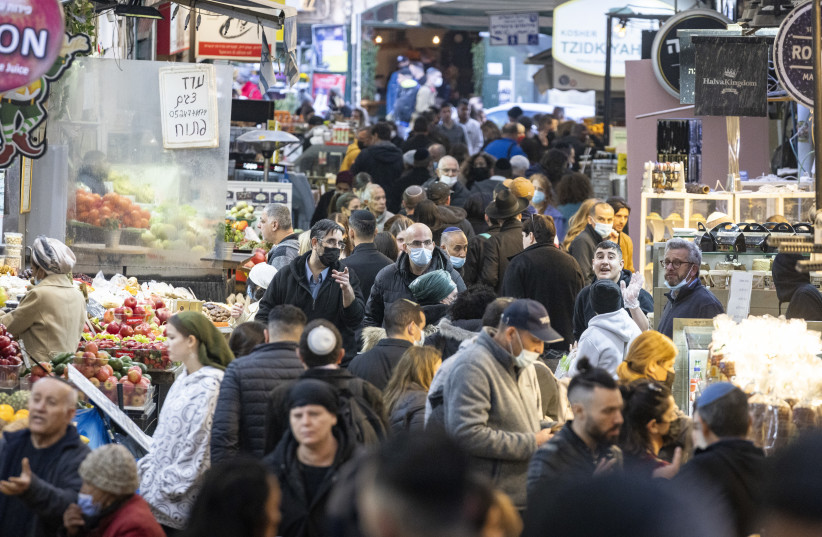
“Bringing the flavors of our Jerusalem kitchen to the campus is a real privilege,” said Granit. “Belgium House will be a lively gathering place for the academic community, and we’re proud to bring the food, energy, and spirit of Mahaneh Yehuda here.” Naama Kaufman-Fass, the director-general and CEO of the Hebrew University, is very pleased with the new development.
Light rail work reshapes Jerusalem
Light Rail construction in downtown Jerusalem has forced the closure of many shops. Some of these stores have been taken over by new proprietors who are optimistic that just as Jaffa Road experienced a revival following many closures during light rail construction, the same will happen with other light rail projects. Still, it is sad to see the closure of any business, especially one that became a city landmark.
When Leon Koffler opened the first Jerusalem Super-Pharm on Histadrut Street in 1981, it was the second in the chain in Israel. The first was in Herzliya. Histadrut Street, which at the time housed the famous Fink’s Bar and the budget-priced workman’s restaurant Sova, long ago ceased to be the address for either, and now it is no longer the address for Super-Pharm.
Large notices advise the public that there are other Super-Pharm branches close by. Indeed, the most glamorous is in Zion Square, a hop, skip, and a jump from Histadrut Street.
Haredi pressure causes literature store to close down
Another popular store that closed is Dani Sfarim in the Ramot Mall. This has nothing to do with construction but with haredi pressure. The Ramot Mall has gradually become a haredi enclave, and Dani Sfarim was the last in the neighborhood stocking secular literature, magazines, and newspapers, which certain figures in the haredi community said would poison their children’s minds.
A story about the closure, written by Yael Freidson, was published this week in Haaretz. The store had been boycotted by the bulk of the haredi population, she wrote, whereas other residents patronized the store not just to buy books but also to attend special events such as book launches and community singing, accompanied by a pianist playing the baby grand in the center of the store.
The bookstore owner denied he was leaving because he was pressured. He contended that he’d been offered a good deal and had accepted it. But other mall shopkeepers told a different tale. The new proprietor of the premises is Feldheim Publishers, which specializes in Jewish holy books and kosher fiction.
Ben-Yehuda mall’s safety concerns resurface
Anyone who came to live in Jerusalem after 1983 may not be aware of the fact that what for more than 40 years has been the Ben-Yehuda pedestrian mall used to be chock-a-block with motorized traffic, including buses. Former mayor Teddy Kollek, who grew up in Vienna where there are many pedestrian malls, dreamed of introducing pedestrian malls to the Jerusalem triangle to make the area more vibrant.
Indeed, for the first few years, it was truly a joy to walk along the Ben-Yehuda Street mall and the side streets branching off from Ben-Yehuda.
But gradually, after Kollek stepped out of the political arena, his successors paid far less attention to keeping the mall free of traffic, and delivery trucks came at all hours, followed by scooters, mini cars, motorbikes, and bicycles, all at high speed.
The mall, which used to be one of the safest places in the city, has become dangerous for people with a mobility problem because they simply cannot move out of the way in time. The worst offenders are the couriers who, aside from whizzing through the mall, ignore traffic lights and crosswalks and ride on sidewalks. Whose job is it to control them?
Beit Avi Chai revisits a powerful musical tribute
The original Beit Avi Chai production of Who by Fire – a tribute to Leonard Cohen based on both the “Unetaneh Tokef” prayer recited on Yom Kippur and journalist Matti Friedman’s book on Cohen’s impromptu performances for Israeli soldiers in the Sinai Desert during the 1973 Yom Kippur War – will be revived at Beit Avi Chai on Tuesday, May 19, at 8:30 p.m.
Much of the material in Friedman’s book was based on information he culled from Cohen’s own notebooks.
greerfc@gmail.com