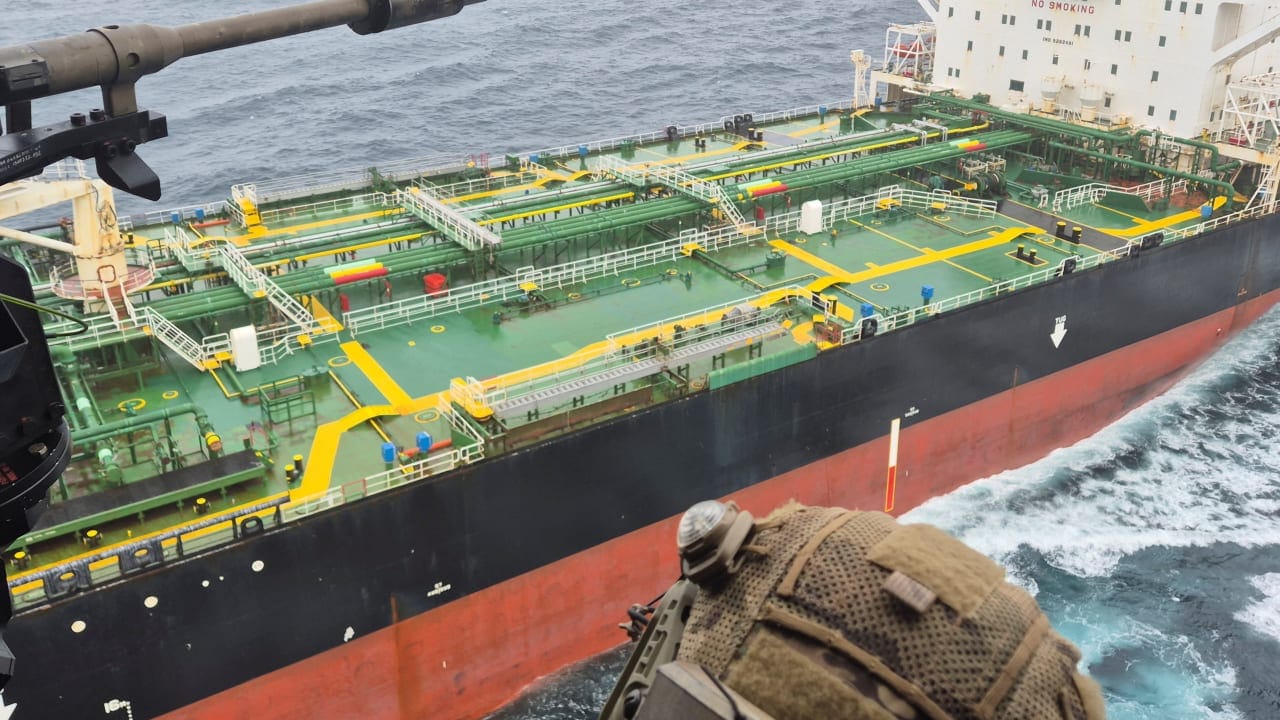
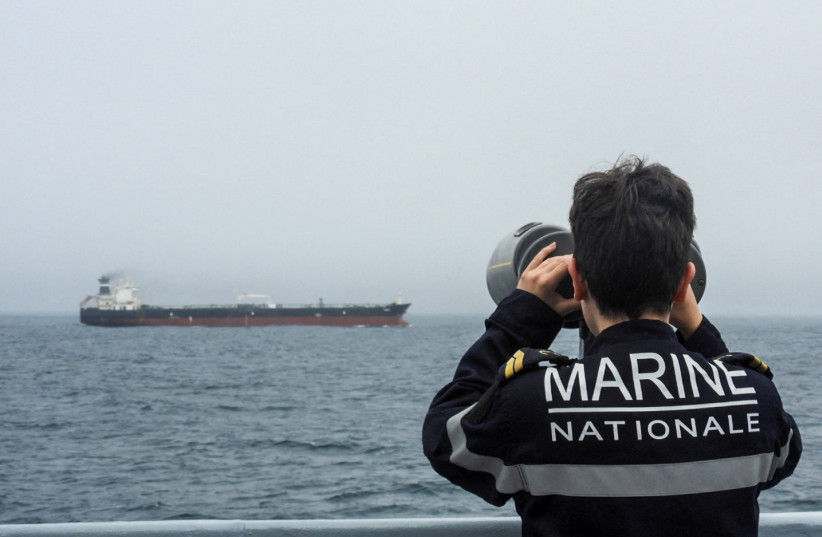
France's navy has intercepted a sanctioned tanker linked to the Russian oil trade in the Atlantic Ocean and ordered the vessel to head for the French mainland, in a move Russia said was illegal and bordered on "international piracy."
French President Emmanuel Macron on Monday posted a video on X/Twitter showing commandos rappelling from helicopters onto the Tagor, during an operation that occurred the previous day in international waters 400 miles (740 km) west of Brittany.
The tanker, which had sailed from Russia's Arctic port of Murmansk, was suspected of flying under a false flag and was intercepted with support from Britain, Macron said. According to the vessel tracker MarineTraffic, the 252-meter-long tanker was sailing under the flag of Madagascar.
France's Maritime prefecture, the state authority for maritime security, said the boarding team's inspection of the vessel's papers had "confirmed suspicions regarding the irregularity of the flag flown."
To try to skirt Western sanctions, Russia has relied on old vessels, known as the shadow fleet, to ship its oil and gas. France and Britain have both vowed to obstruct such vessels as part of a European strategy to combat the oil revenues that help fund Russia's war efforts in Ukraine.
"It is unacceptable for ships to circumvent international sanctions, violate the law of the sea, and finance the war that Russia has been waging against Ukraine for more than four years," Macron wrote on X.
Kremlin spokesman Dmitry Peskov said Russia did not agree that international law had been followed.
"We consider such actions illegal; they border on international piracy," Peskov told reporters, adding that Russia would take measures to ensure the safety of shipping cargo in response to the incident.
Russian Foreign Ministry spokeswoman Maria Zakharova, in a subsequent statement, said the French action, citing international law, was "yet another example of European legal nihilism and rewriting the rules for their own benefit."
Zakharova dismissed references to international sanctions, saying such punitive measures were only valid if approved by the UN Security Council and not "illegal unilateral measures ... in the imagination of the Franco-British pirate tandem."
On Monday, the Tagor was steaming under naval escort towards an anchorage off northwestern France, according to the Maritime prefecture.
The Tagor is the fourth sanctioned tanker the French have intercepted.
False flag
The EU has imposed 19 packages of sanctions against Russia, but Moscow has adapted to most measures and continues to sell millions of barrels of oil to countries such as India and China, typically at discounted prices.
Western sanctions and a small number of interceptions have had little obvious impact on the "shadow fleet" at a time when oil prices, pushed higher by the Iran war, offer tankers a big incentive. Instead it is the Ukrainian strikes on Russian oil facilities that are stopping Moscow from capitalizing on the spike in global fuel prices.
In April, Russia deployed a frigate to escort two sanctioned vessels through the English Channel and the Kremlin said Russia had the right to defend itself against what it called piracy.
Days later, Estonia said it would refrain from detaining Russian shadow fleet tankers, worried that such actions could provoke a military response from Moscow.
British Prime Minister Keir Starmer said in March that he had granted permission for the UK military to board ships belonging to the 'shadow fleet'. However, shipping data shows that dozens of sanctioned vessels have continued to cross UK waters.
In April, owners of the Mozambique-flagged tanker Deyna paid an undisclosed fine to secure the ship's release after it was detained by France.