In what may be a first for a British labor leader, the head of one of the United Kingdom’s largest trade unions on Monday called for direct British military involvement in the Gaza Strip.
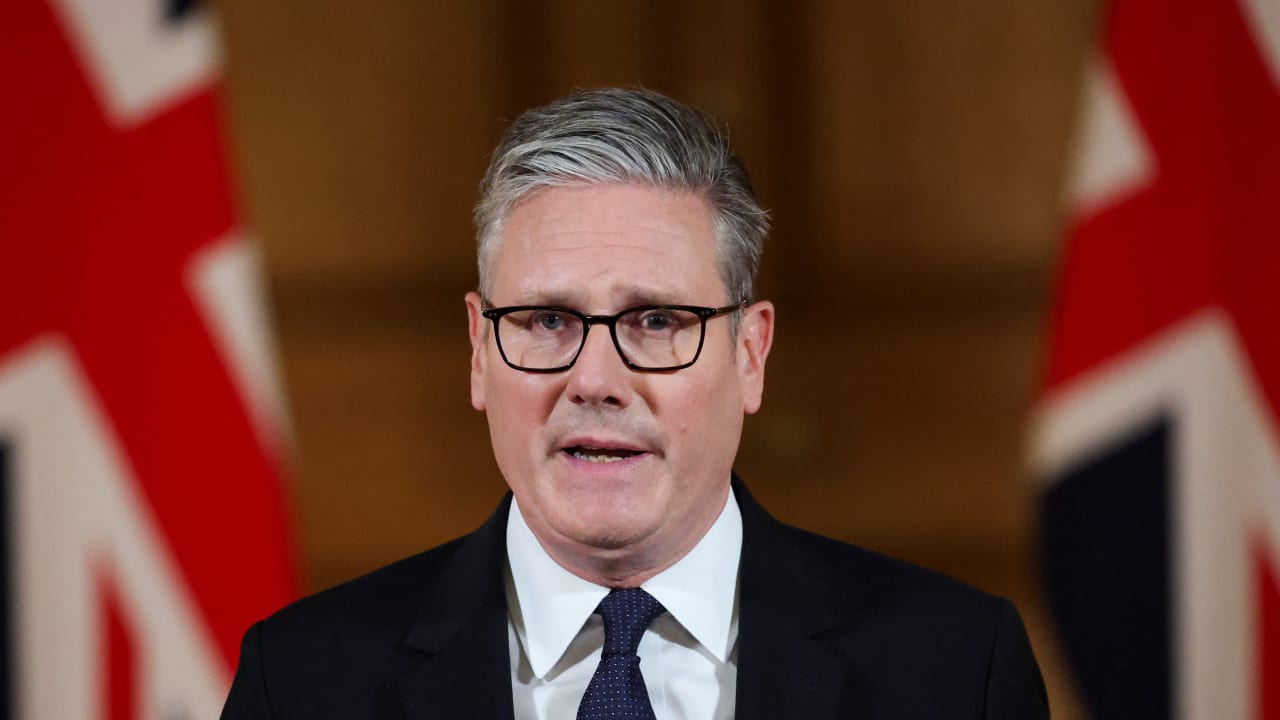
Unison general secretary Christina McAnea, speaking at an event affiliated with the Palestine Solidarity Campaign, urged Prime Minister Keir Starmer to “force the borders open” to allow the delivery of humanitarian aid into Gaza.
She criticised current efforts, such as airdrops, calling them “wasteful and ineffective,” and said, “the time for diplomacy is over,” citing NATO’s military intervention in Kosovo as precedent.
Unison, which represents more than 1.4 million British workers, has consistently voiced strong opinions regarding the Israel-Hamas conflict. In November 2023, the union was one of the first to call for a ceasefire following the outbreak of war, and during 2021’s Operation Guardian of the Walls, it demanded that Israel halt its military operations. At the time, Unison did not mention Hamas by name.
Critics have argued that the union disproportionately targets Israel in its foreign policy resolutions, often raising issues that are viewed as unrelated to its core labor agenda.

In 2023, following the adoption of an anti-Israel resolution at its annual conference, Labour MP Luke Akehurst described Unison’s stance as “one-sided and demonizing” in a statement to Jewish News.
Concerns over famine amid continuing war
Since the Hamas-led massacres of October 7 and the subsequent Israeli military campaign in Gaza, global attention has turned to the deteriorating humanitarian conditions in the coastal enclave. Accusations have emerged that Israel is deliberately limiting food supplies, a charge the Israeli government denies.
In August, a UN-backed report stated that parts of Gaza were in a state of famine. Israel rejected the findings, pointing to increased efforts to facilitate aid, including expanded airdrops and cooperation with the Gaza Humanitarian Foundation, or GHF. The foundation coordinates the distribution of an estimated one to two million meals daily.
Despite these efforts, the GHF has been at the center of controversy. Its aid stations have been described by critics as dangerous, with frequent allegations of violence against Palestinians seeking assistance. While little verified evidence supports these claims, some reports suggest that Hamas operatives have tried to provoke confrontations at aid distribution sites.
According to COGAT, the Defense Ministry body responsible for coordination with the Gaza Strip, nearly 130,000 tons of non-food humanitarian aid entered Gaza via land routes in August. However, UN figures show that many aid trucks do not reach their intended destinations. This has led to questions over whether increasing the volume of aid deliveries would improve the situation on the ground.
Kosovo precedent cited in union speech
McAnea compared the situation in Gaza to NATO’s military intervention during the Kosovo War of 1998–1999. At the time, NATO forces bombed Yugoslav military positions in response to ethnic cleansing operations against Kosovar Albanians. The conflict resulted in tens of thousands of deaths and displaced nearly one million people.
Following the war, more than 100 individuals, primarily Serbs, were indicted by a special United Nations tribunal for war crimes. Many were convicted on charges including genocide and crimes against humanity. Former Yugoslav president Slobodan Milošević, who was facing 66 charges, died in custody before a verdict was issued.