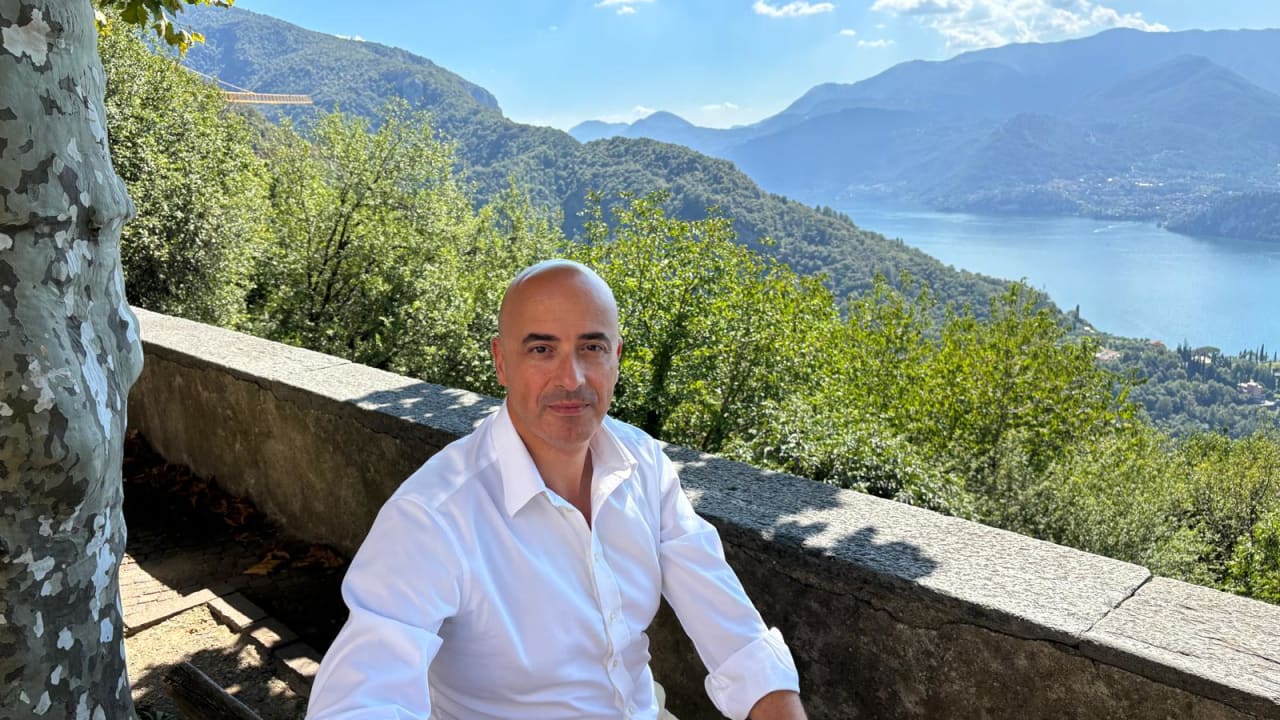
For two days now, I have been walking alongside Yehiel Tsuberi through the picturesque alleyways overlooking Lake Como, and it feels as though I am walking with an unofficial mayor. We are in the heart of what is known as the "Golden Triangle" - the point where the three main towns of Varenna, Bellagio, and Menaggio meet the inverted Y-shaped expansion of the lake. The view is breathtaking, but what fascinates me more than any ancient stone or reflection of mountains in the water is the way the Italians receive Yehiel.
Every few meters, someone stops us. A warm hug, a pat on the back, a wide smile, a flowing conversation in rich, emotion-filled Italian. They laugh with him, dance with him in spontaneous encounters, invite him for local wine. I asked him if these were distant acquaintances or colleagues, and he answered simply: "These are my friends. This is how I live, and this is how I work." We sat together at a table, shared simple, exquisite Italian food, and paused the recorder for a moment just to breathe in the silence and this rare human connection.
Yet beneath this pastoral tranquility and overwhelming local warmth, I was exposed to a jarring, almost unbelievable drama - a story of blind hatred that pursued Yehiel all the way here, and the surprising way he chose to confront it.
The October 7 Massacre and the fire that reached Como
Yehiel is no stranger to Italy. He completed both his bachelor’s and master’s degrees in architecture at the renowned Politecnico di Milano, integrated into leading firms, and obtained Italian citizenship. He knows the local culture, language, and philosophy inside out.
When war broke out on October 7, Yehiel, his wife, and their three children were at the end of a trip to New Zealand, just moments before their planned return to Israel. Airspace closed, utter confusion reigned, and they landed temporarily in Italy. Italian friends opened their doors and hearts, helping them settle in. Yet the moment an opportunity opened - just four days later - Yehiel and his family boarded a flight straight back to Israel. The exact opposite of what many would expect from someone holding a European passport and a home abroad.
However, the war and hostility did not stay within the borders of the Middle East. Recently, Yehiel found himself at the center of an orchestrated, violent, and ugly campaign by pro-Palestinian groups in Italy. It began with an article addressing environmental aspects of his project in the leading newspaper Corriere della Sera, but quickly spiraled into a personal, venomous campaign against him due to his Israeli and Jewish identity: flyers, online videos, hate messages, and protests that reached into the heart of this pastoral region.
Three consecutive articles were published in the Italian press. The local mayor and numerous residents openly stood by his side, appalled that an individual was being boycotted and attacked solely for his nationality, in total contradiction to Italian law and spirit.
The personal confession and the secret kept from his mother
When I asked Yehiel how it feels when such hatred confronts all the goodwill and friendship he invests in Italy, I saw vulnerability alongside strength in his eyes. He shared an intimate, chilling moment: "It's terrifying. These groups are dangerous, and they have painted a target on my back. Until this article is published, my mother had no idea. She doesn’t know what I'm going through here. I kept it from her to spare her the worry. Now, feeling strong and secure in my path, it’s time to tell the story."
Faced with this threat, Yehiel refused to surrender to the natural fight-or-flight response. He chose what he calls the "Third Way" - pro-positivity.
"I will not run away, and I will not waste energy on wars of hatred," he told me as we stood facing the water. "Throughout the generations, whenever the Jewish people were persecuted, their response was always to do more: create more art, write more, build more, contribute more to the world. This attack didn't weaken me; it drove me to act with an intensity I hadn't known before. I delve deeper into my roots, write texts I haven't written in twenty years, and bring Israeli identity and mutual responsibility right into the heart of Italy."
The Jerusalem Continuum: Breathing life into the ancient village
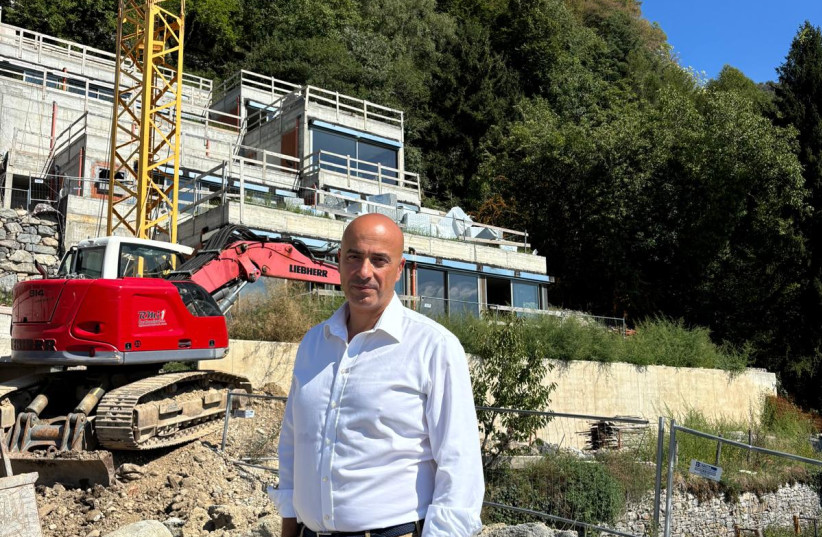
This mission comes to life in the unique project Yehiel is currently building alongside his partner - his former university lecturer and employer, a respected Italian architect. The project is located in Bolognina, an ancient hamlet within the municipality of Perledo, just minutes from the lake's shores.
The structure is designed in organic terraces offering an unobstructed, 100% open view of central Lake Como. Within two months, it will be fully covered with soil and green vegetation, blending entirely into the wild landscape. Yet for Yehiel, the engineering framework is merely an outer shell. The true essence is what he calls the "Jerusalem Continuum."

"In architecture, there is the Athenian, rationalist continuum, which begins with geometric form," he explains. "And there is the Jerusalem continuum, the emotional one, which begins with the person and the human experience. I don't ask how many square meters I can sell; I ask what this village needs to come alive again. These villages are too quiet. My dream is to hear laughter and the sounds of children playing in the central piazza again; to bring tourists who buy cheese and wine directly from locals; to enable weddings from around the world, across all religions and genders, in the church and town hall of Perledo. To turn this project into a heart that pumps fresh life into this place."
Creator-entrepreneur: Calling on Italy to rediscover itself
Yehiel defines himself as a "creator-entrepreneur" - a concept that restores the architect to their Renaissance-era standing, when thinkers were also doers: artists, philosophers, and bridges between different worlds. He avoids aggressive, traditional marketing methods, relying instead on genuine human connection, shared passions, and a love for food, nature, and architecture.
As our tour neared its end, with the sun dipping behind the peaks of Como and painting the water in deep gold, Yehiel summarized the philosophy driving him:
"All of Western civilization rests on two historical pillars - Athens and Jerusalem, Rome and Jerusalem. The great Renaissance humanists, like Pico della Mirandola, learned Hebrew to understand Jewish scriptures, blending Jerusalem emotion with Western logic. You cannot sever one leg and expect the culture to stand. My message to Italians and Israelis alike is to believe in themselves, never surrender their identity, and not be afraid. We don’t need to fight the darkness - our task is simply to kindle more and more light."