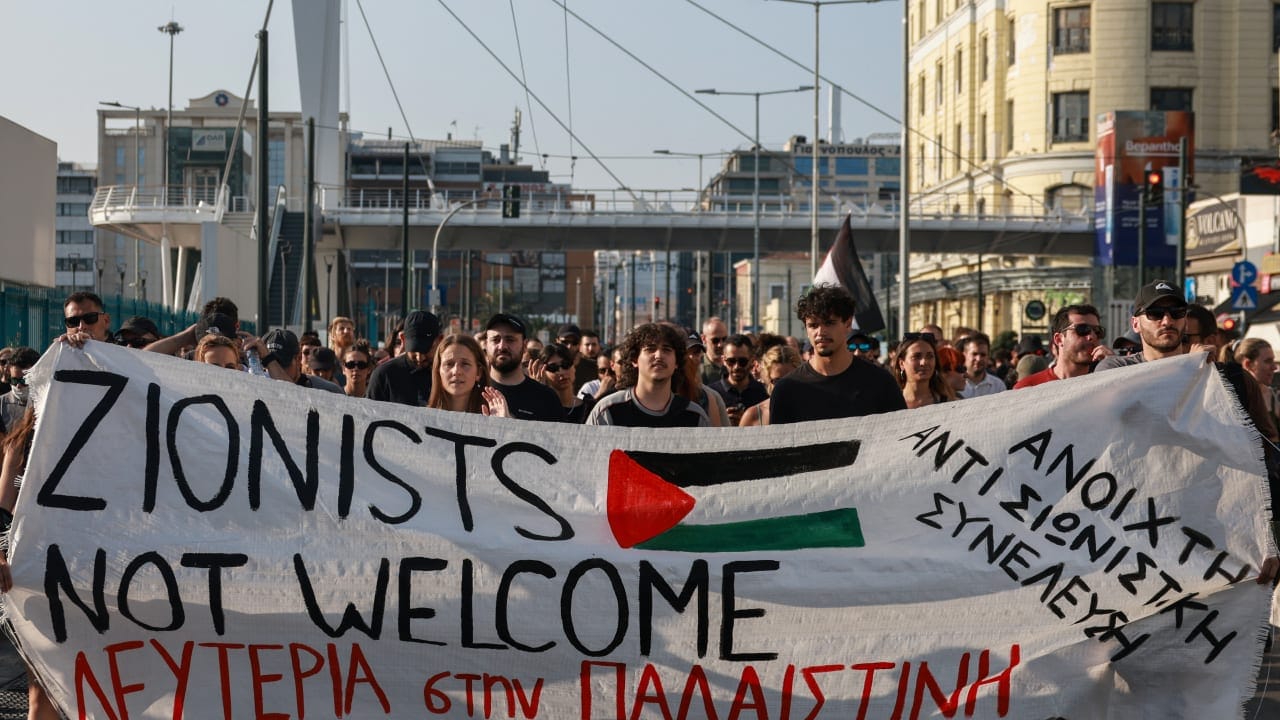
Pro-Palestinian activist networks in Greece launched a coordinated nationwide “Day of Action” on Sunday, organizing dozens of demonstrations across the country’s islands and major cities.
The main organizing groups are BDS Greece, the Palestinian Community in Greece, and March to Gaza Greece.
In a call to action prior to the event, BDS Greece said that the action “is peaceful,” with the aim of “spreading the message #NotInOurName and #NotInOurLand everywhere.”
“We do not provoke, but at the same time we do not tolerate provocations. We raise flags, chant slogans, and speak with the people around us. We are present and confident, without aggression. In the event of tension, we remain calm and record the incident on video,” it instructed.
“Wherever you are on August 9, raise the flag, wear the keffiyeh, distribute informational material, and send the message.”

Large-scale protests and public disturbances expected across Greece
Images and videos of the protests viewed by The Jerusalem Post on Telegram and Instagram showed mainly small groups of keffiyeh-clad individuals with banners reading “Zionists not welcome here” or “no to genocide.”
According to a report issued by the Diaspora Affairs and Combating Antisemitism Ministry, the actions aim to target Israeli tourism, military cooperation, and economic ties between Athens and Jerusalem.
The ministry’s national situation room warned that activist groups are utilizing a decentralized strategy, encouraging supporters to stage protests wherever they are vacationing or working.
The campaign is being coordinated through a central Linktree page named “9A,” which features an interactive map of planned protest hubs and a list of suggested chants for the protests.
This includes “It is not self-defense; it is genocide,” and “from Havana to Tehran, let NATO and Americans be defeated.”
Organizers are calling for a comprehensive boycott of Israel, demanding that the Greek government end military and diplomatic cooperation, implement an arms embargo, and impose sanctions.
Key demands also include the revocation of visa-free entry for Israeli citizens, the implementation of background screenings for Israeli reservists, and the denial of “safe haven” for those the activists allege are responsible for war crimes.
Israeli security officials express particular concern for the safety of Israeli tourists
Israeli security officials have expressed particular concern regarding the safety of Israeli tourists during the protests, based on the ministry’s assessments.
One high-risk location identified in the ministry’s report is the city of Agios Nikolaos, where the Israeli cruise ship Crown Iris is scheduled to dock today.
The ministry warned that the ship’s arrival could increase the likelihood of harassment directed at Israeli passengers.
Furthermore, intelligence analysts cited in the report anticipate that the demonstration in Athens, scheduled for 7:00 p.m. at Monastiraki Square with a march toward Syntagma Square, will be the most prominent.
Based on previous similar actions in Greece outlined by the ministry, the Athens protest is expected to draw the largest number of demonstrators and poses a heightened risk to Israeli tourists in the area.
However, “Greece and the Islands,” the largest travel site for Israelis visiting Greece, said the “day of rage” fears were exaggerated in Israeli media.
“Contrary to reports in the Israeli media about a ‘day of rage’ in Greece, there is no plan for a day of rage, and there are no protesters who will be ‘looking for’ Israeli tourists,” the page said.
In reality, the protest day was several democratic and legal demonstrations organized by far-left groups against what they see as the policies of the Israeli government.
“The demonstrations are expected to be small, with most participants not even being Greek, and to take place at various destinations across Greece.
“There may be larger gatherings in Athens and Thessaloniki, but even there, this does not involve large numbers of Greeks. Most Greeks either support Israel or are simply not interested in the Israeli-Palestinian conflict,” it said.
“It is highly advisable to take reports on social media, in Israel, and on Israeli news broadcasts with a grain of salt.”