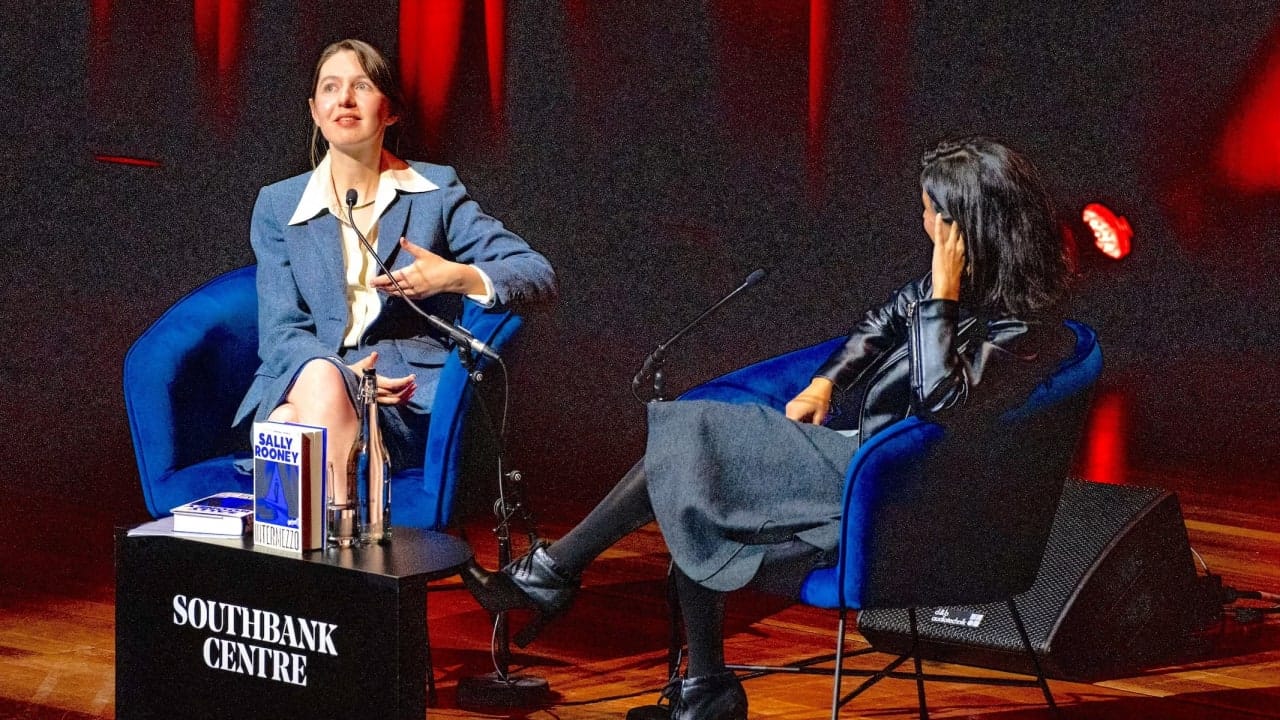
Irish novelist Sally Rooney, who drew headlines in 2021 for refusing a Hebrew translation of one of her books, is now publishing her latest novel in Hebrew through an Israeli publisher approved by boycott activists.
The Hebrew translation of Intermezzo, due out next month, will be published by November Books in collaboration with the left-wing Israeli news sites +972 Magazine and Local Call. The arrangement was announced this week alongside an interview Rooney conducted with Palestinian-Irish activist Samir Eskanda for The Guardian.
Rooney’s decision marks an unusual but not unprecedented attempt to work within the framework of the Boycott, Divestment and Sanctions movement, or BDS, which has long called on artists and cultural figures to avoid working with Israeli institutions it considers complicit in Israeli government policies toward Palestinians.
In 2021, Rooney declined to sell the Hebrew translation rights to her novel “Beautiful World, Where Are You?” to the Israeli publisher that had previously published her books in Hebrew. At the time, she said she supported the BDS movement and would not work with an Israeli publisher unless it was willing to “publicly distance itself from apartheid and support the UN-stipulated rights of the Palestinian people.”
That move prompted backlash in Israel and beyond, including calls to boycott Rooney’s work. Israeli bookstore chains reportedly removed some of her books from shelves.
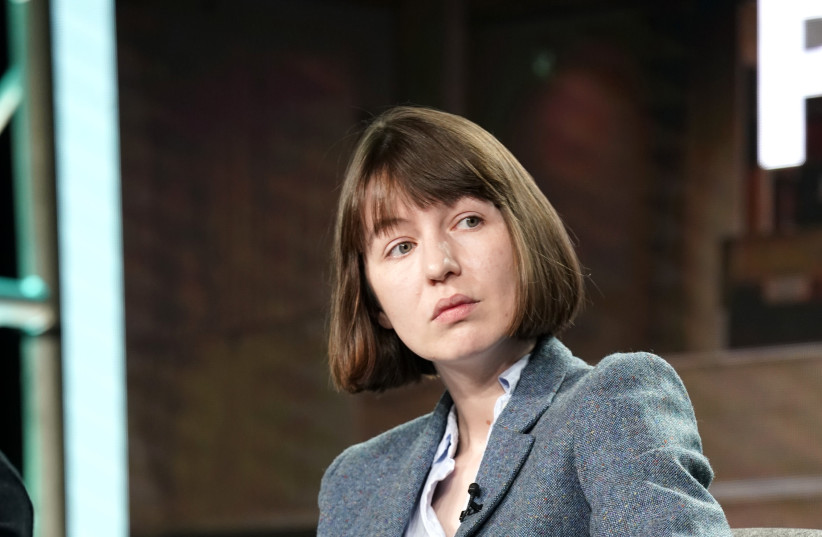
Now, Rooney, 35, says she believes publishing Intermezzo in Hebrew through November Books is compatible with the boycott campaign because the publisher does not operate in West Bank settlements, does not receive Israeli government funding, and has endorsed Palestinian rights.
“Though my refusal to work with complicit Israeli publishing houses made the contractual side of things more complex, I was, of course, never boycotting the Hebrew language or any language,” Rooney told The Guardian. “I’m very pleased that Intermezzo will soon be available in Hebrew with November Books.”
Author remains in contact with BDS founding arm
Rooney added that she had stayed in contact with PACBI, a founding arm of the BDS movement that advises artists on cultural boycott issues, “to try to ensure that I was upholding both the letter and the spirit of the institutional boycott.”
Haggai Matar, the executive director of +972, said BDS is willing to work with Israeli publishers if they express that they are not “complicit” with the Israeli state, do not accept government funding, nor operate within the settlements.
BDS also demands that its targets recognize the rights of Palestinians under international law, including the right of return of Palestinians seeking to reclaim their former homes in modern-day Israel. While Israel and many of its supporters consider such claims an existential threat, Matar said it “can be implemented in all sorts of ways.”
Asked why +972 was eager to help publish Rooney’s book, Mattar told the Jewish Telegraphic Agency that it was an opportunity to “dispel myths that BDS is antisemitic or aimed at all Israelis.”
“To take someone as famous as Sally and as outspoken on the Palestinian issue was a great opportunity to say, ‘Look, Israelis aren’t outcasts. This is not about our identity.’ It is an attempt by Sally and the BDS movement to not be involved with organizations that are complicit with apartheid or war crimes. Once you act and say that you aren’t, you are not subject to boycott at all.”
Since October 28, 2024, more than 7,000 writers have signed onto a boycott of “complicit” Israeli literary institutions. The boycott said it had evaluated 98 Israeli publishers and found that only November Books met its exemption criteria.
November Books is a small Israeli nonprofit that distributes its books mostly through independent bookstores. It has previously published Hebrew translations of works by Ta-Nehisi Coates and Naomi Klein, both of whom support the boycott.
“Our task as a movement is to channel anger at Israel’s genocide in Gaza into the most meaningful initiatives,” said Rooney. Israel denies that the war in Gaza is a genocide, and supporters have called the war in Gaza a proportionate response to the Hamas attacks of October 7, 2023, in which 1,200 people were killed in Israel, and 251 were taken hostage.
Rooney also acknowledged what she described as inconsistencies in her earlier decisions. Rooney said that while she had supported BDS as a consumer, she had initially sold Hebrew translation rights for her first two novels to an Israeli publisher before concluding that mainstream Israeli cultural institutions were implicated in state policies she opposed.
“By the time it came to selling the rights for my third book in 2021, things had changed,” Rooney said. “I had come to a better understanding of the complicity of the Israeli culture sector in that apartheid system.”
Rooney’s novels, nearly all of which are global bestsellers, have been translated into more than 40 languages and adapted for television by the BBC and Hulu.
Jewish authors targeted since Oct. 7
The literary world has become a nasty, if bloodless, battleground since October 7. Jewish writers say they have been targeted as “Zionists” even when their views on Israel aren’t public, bookstores have canceled publicity events for Jewish authors, and it has become more difficult to publish works with Jewish themes.
Meanwhile, Rooney asserted that “people” had warned that her decision to boycott Israel would harm her career, suggesting to her that she “had no idea what I was up against.”
“In reality, I have gone on writing and publishing happily since 2021,” she said.
Matar rejects the criticism that the cultural boycott, by targeting the literary and artistic community, only harms politically liberal voices and their ability to shape public opinion.
BDS, he told JTA, is a “nonviolent tool asking a publisher ‘to stand by us and not participate in our oppression.’ These are very minimal demands, not silencing or too heavy a burden.”