As the parent of a high-school junior and someone who has worked with Jewish college students almost my entire career, nearly all the conversations I have with other parents revolve around the college search process and - unfortunately - one question: “Is there antisemitism on campus?”
It’s the wrong question.
Not because antisemitism isn’t real or serious. It is. In our “new normal,” the unfortunate reality is that antisemitism is everywhere. According to a recent survey by the American Jewish Committee and Hillel International, 42% of Jewish college students nationally reported experiencing antisemitism.
No campus is immune.
The right question to ask is: “If there is antisemitism, what happens next?”

What actually shapes a Jewish student’s experience isn’t the absence of incidents; it’s the support in place if they occur. Is there a professional staff that knows administrators and community partners by name? Does the campus have a Hillel or other Jewish student organization with deep relationships across the university, faculty, deans, and trustees, forged over the years rather than assembled in a crisis?
And while it may seem counterintuitive, a university that has demonstrated, when tested, that it will take action and stand up for Jewish students is probably preferable to one that has not.
Being Jewish 'not defined by antisemitism'
However, just like being Jewish is not defined by antisemitism, neither should a Jewish student’s experience on campus.
Each young person will have different needs, and so the next important question to ask is: “What is there to help my son or daughter live Jewishly, however you - or they - define it?”
Some students may want kosher meals or a prayer minyan three times a day, and others may be excited about a Jewish fraternity or sorority. The options within a school’s Jewish infrastructure matter most in how they match who your student is and what they’re looking for in a Jewish community.
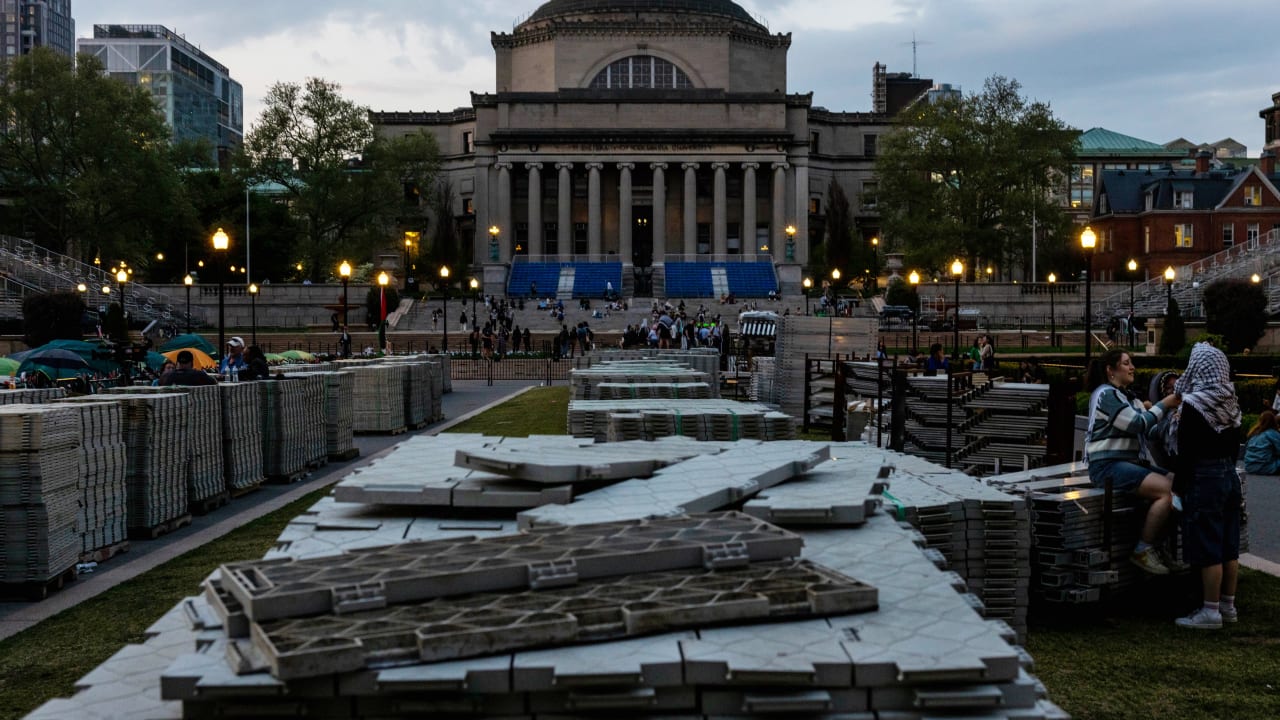
At Columbia University, where I’ve served for the past 14 years, I have seen this play out in real time.
It’s not a surprise to anyone reading this (or has been reading the news the past two years), that Columbia has had real challenges. I’m not going to pretend otherwise.
But here is what I have seen and the headlines often miss: a university that has been forced to reckon publicly with antisemitism is a university that has been forced to build. For the university itself, this means they have had to devise processes and policies, hire personnel, and take action to begin resetting the campus culture.
For the Jewish communal professionals on campus, it means we have deepened our work to be advocates and partners with the university. In fact, I’d wager our team has developed closer working relationships with administrators, faculty, and trustees than at almost any other campus in the country. Those relationships weren’t handed to us. We earned them, in part, by being present through the hardest moments.
And through all of that, we have had to figure out how to sustain and build Jewish joy. We hosted more than 1300 students, faculty, and administrators for a massive Shabbat dinner on the university’s basketball court, we held an Israel Independence Day celebration in the middle of campus, and our Kraft Center for Jewish Life is filled to capacity nearly every week.
This year alone, we sent students to Israel, Poland, Curacao, Greece, Brazil, and Mexico. Keeping up our consistent drumbeat of programs during tough times has made our Jewish community stronger.
So, for all those Jewish high school seniors who just got their acceptances and are trying to make that tough decision about where to study, the question is not where can I avoid antisemitism. The question is: where can I go where there is someone in my corner to help, and who is actively building and nurturing the best defense against antisemitism: a vibrant, joyful Jewish life?