
US Central Command used “one-way attack sea drones for the first time,” it said Monday, referring to a new round of strikes against Iranian regime targets.
The US has been increasing its strikes over the past week in response to Iran’s attacks against several oil tankers last Monday and Tuesday.
The US did not specify the type of “one-way attack sea drones” that were used “for the first time,” but they are clearly an example of how innovative technology is being used at sea and improving drone warfare. The campaign against Iran has now entered a cycle in which the US attacks dozens of targets at night, and the Iranians respond. There is a push to end this tit-for-tat. Qatar, for instance, is seeking to get both sides to de-escalate.
This all comes in the wake of a ceasefire in April and a Memorandum of Understanding (MoU) in June. Importantly, the US can also use new technology to confront the Iranian threat.
One of the new technologies is in the realm of drone warfare. The US, especially CENTCOM, has been investing resources into new types of drones in recent years.
One realm of drone warfare is at sea. This doesn’t all involve defensive weapons. Drone boats, also called “unmanned surface vessels,” can be used for a variety of tasks.
How did we get here? Drone warfare has been increasing for decades. Aerial drones were pioneered in Israel and the United States. They were used as target drones and for surveillance, and eventually, they were armed.
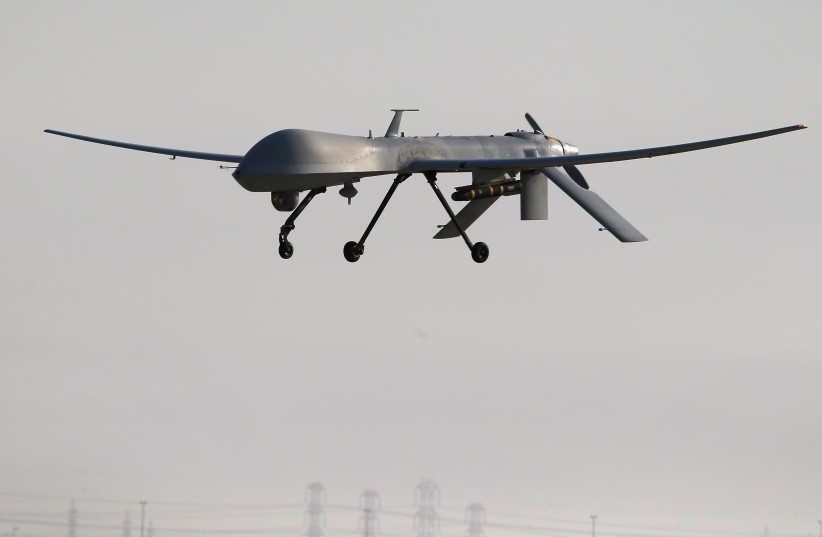
The American Predator, for instance, was an early example of an armed drone. Israel’s loitering munitions – “kamikaze” or “suicide” drones – such as the Harpy, are another example.
As drone warfare developed in the air, it became clear that it could have unmanned applications on land and at sea. On land, this consists of robots, either tracked or wheeled vehicles, or even robotic dogs.
At sea, drones are an obvious choice for navies. Naval ships are expensive, large, and take years to make. The US has faced a growing challenge at sea as it seeks to increase shipbuilding and also grapples with the outcomes of programs such as the Littoral Combat Ships that Washington poured money into.
Naval drones in the maritime battlefield
Naval drones offer a quick way to pivot into the new maritime battlefield. Some of the naval drones being developed are still under wraps. For instance, the new system the US used on Sunday does not appear to have been revealed to the public.
In 2021, Naval News new site reported: “The US Navy announced the commissioning of Task Force 59, a new task force that combines manned with unmanned systems and artificial intelligence for maritime operations in the US Navy’s 5th Fleet area of operations, or US Naval Forces Central Command (NAVCENT).”
The current commander of CENTCOM, Adm. Brad Cooper, was, at the time, a vice admiral and commander of NAVCENT, US 5th Fleet, and Combined Maritime Forces, based in Bahrain, from 2021-2024. As such, Cooper played a key role in establishing Task Force 59 with Capt. Michael D. Brasseur, who became the first commodore of the Task Force.
“Task Force 59 aims to use unmanned air, sea, and underwater systems in an operational maritime environment to test, integrate, learn lessons from, and practice deployment and tactics for the NAVCENT,” Naval News reported at the time.
In November 2022, the US Navy reported: “US 5th Fleet began a three-week unmanned and artificial intelligence integration event in Bahrain, November 23, that will involve employing new platforms in the region for the first time.”
“The event, called Digital Horizon, will advance the command’s efforts to integrate new unmanned technologies while establishing the world’s first unmanned surface vessel fleet by the end of next summer,” it said. “US 5th Fleet’s efforts are focused on improving what US and regional navies are able to see above, on and below the water.”
Today, the fruits of all this work are paying off. In June, an unmanned drone boat rescued two crew members of an Apache that went down at sea.
The benefits of drone warfare
The use of new naval attack drones is a significant development. It is part of the overall trend to use more unmanned systems at the edge of the battlefield.
Rather than having people exposed to threats, sending in drones can reduce casualties. This has already been demonstrated in Ukraine.
The US has been investing heavily in new, cheaper systems for this arena. The key to unmanned systems being used in the most dangerous parts of combat is that they need to be attritable, meaning they are cost-effective and can be sacrificed.
In the case of one-way attack drones, the whole point is that they are being destroyed. The experience of Western countries with these systems, however, is that they invested in expensive cruise missiles in the past.
Today, the goal is cheaper systems that accomplish the same level of accuracy and deal the same amount of precision blows to the enemy.
US-based Anduril Industries, for instance, has created the relatively low-cost Barracuda cruise missile. The US has also invested in the LUCAS (Low-cost Uncrewed Combat Attack System), which is modeled on the Iranian Shahed delta-wing-style drone.
The overall sense one gets is that CENTCOM is now at the forefront, utilizing new innovative defense technologies on the modern battlefield. The conflict with Iran affords the US an opportunity to see how these new systems work.
On Monday, CENTCOM said it had “completed a new wave of offensive strikes against Iran, July 12, hitting dozens of targets at multiple locations with precision munitions to degrade Iran’s ability to continue attacking international shipping flowing through the Strait of Hormuz.”
Its “forces struck Iranian military air-defense systems, coastal radar sites, missile and drone capabilities, and small boats using US fighter aircraft, naval vessels, one-way attack aerial drones, and one-way attack sea drones for the first time,” CENTCOM said.