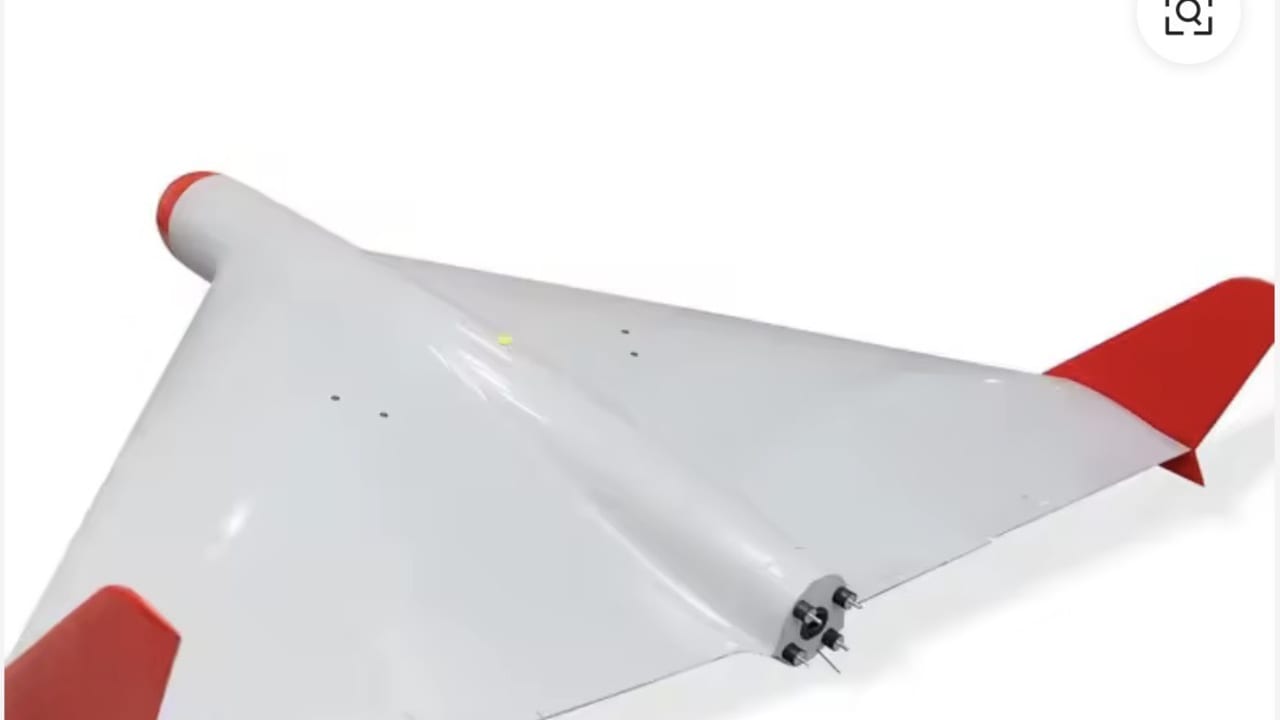
As Iran bombards Middle Eastern countries with swarms of suicide drones, unmanned aerial systems (UAS), similar to those used in war can be found for sale online, sometimes marked as “model planes.”
Chinese e-commerce site Alibaba features multiple listings for drones, which are categorized for commercial use, yet carry an uncanny resemblance to the Iranian Shahed-136 suicide drone. Shahed-136 drones carry a warhead of up to 90 kilograms and fly in swarms before crashing into their targets.
Alibaba’s terms of service ban the sale of military equipment on the site. Yet, in recent days, it has come under scrutiny for carrying listings like these, leading the company to take down certain listings blatantly advertising “cruise missiles” and “suicide attack drones.”
Still, listings that use other keywords or names have avoided being taken down, and Defense & Tech by The Jerusalem Post was able to identify four listings for the Shahed-136 copy, with prices ranging from around $6,000 to over $40,000.
Two of the listings name the drone model as Mosquito SM200G, while the other two don’t name a model, but seem to be the same, due to identical technical specifications, such as wingspan, speed, fuel capacity, and more. Both “Mosquito” listings boast a swarm capability, which Shahed-136 drones use to overwhelm aerial defense systems.
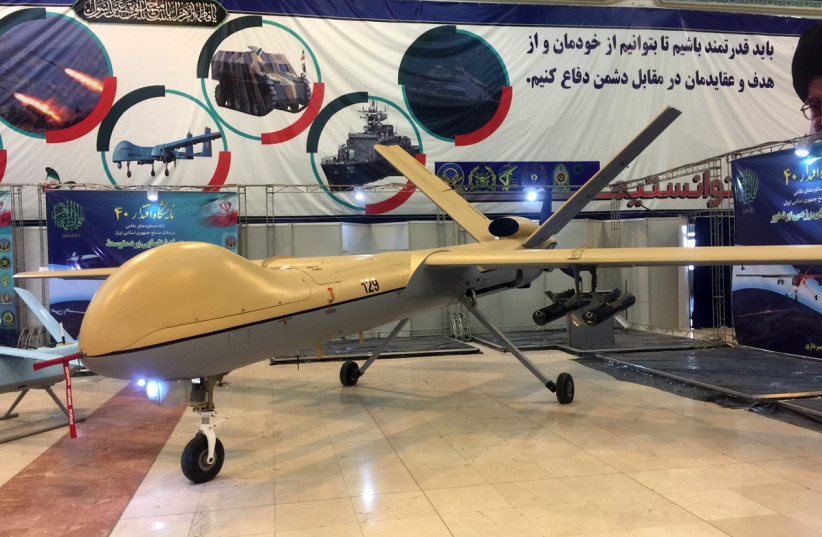
Additionally, the design of the drone is nearly identical to the Shahed-136, with its round nose and delta wings.
Notably, the copy is slightly smaller and lighter than the original, and seems to be capable of carrying smaller payloads (around 10 kg.). The copy also has a maximum speed of around 150 km/h, making it slightly slower than the Shahed-136.
Warning from Alibaba
Three of the listings carried a warning from Alibaba, saying that the site “strictly prohibits the sale of military drones and dual-use drones on our platform” and doesn’t “support the practice of repurposing civilian drones sold on [Alibaba] for military use.”
However, one of the listings lacked this warning, suggesting it may have gone unnoticed and wasn’t flagged by the platform as a potentially offensive drone. Instead, it was categorized as a “model plane” and offered for sale by a company that typically deals in RC planes and boats.
When contacted by D&T, a sales representative for the company said that the so-called “model plane” was a copy of the Shahed-136 and could be armed with explosives.
The representative also told D&T that it could ship the drone to Russia if needed. This interaction suggests that little effort is required to bypass platform safeguards and market military systems under civilian guises.
The copy is also sold by companies outside of Alibaba, though they more likely target a domestic market rather than international sales. In September 2025, China restricted the export of UAVs, making it significantly harder for UAV companies to trade internationally.
One Chinese UAV company sells the Mosquito SM200G under another name. On its website, however, this company freely admits that its product is a “mini version” of the Shahed-136, and a representative told D&T that it is in fact a “suicide drone.” Yet, the representative said that the company couldn’t export the drone outside of China due to the legal restrictions.
Another Chinese company presents the drone under the Aerostrike10 label with foldable wings, an upgrade from the Shahed-136.
Once again, the company describes it as a loitering munition meant for “long-range precision strikes,” showing no hesitation in revealing the offensive nature of the drone. D&T could not confirm that the company was willing to export the drone.
Overall, the picture that emerges is one of uneven enforcement and easy workarounds.
While rules exist on paper to prevent the sale and shipping of military drones, sellers can still advertise systems with clear offensive purposes, under different names or categories. The result is a marketplace where the distinction between commercial and military technology is often blurred, and where restrictions appear easy to sidestep.