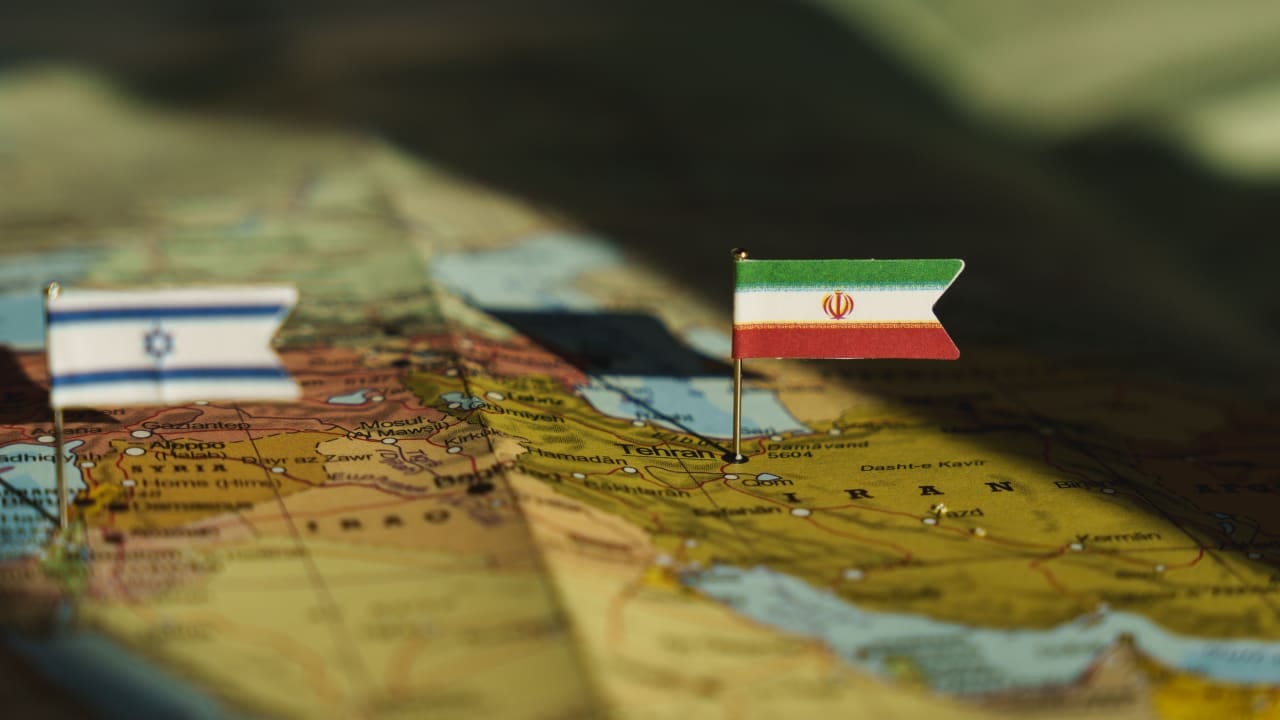
Although Operation Rising Lion, aka Epic Fury, is being fought in one geographic arena, it is best understood as a war unfolding across three distinct chessboards.
On the first chessboard: the direct military contest between Israel and Iran, the outcome is clear. Israel has won decisively. Within just three weeks, the IDF, working in close coordination with CENTCOM, has dismantled much of Iran’s core military infrastructure and reduced its capabilities to the lowest possible level.
In strategic terms, the potential existential threat Iran posed to Israel has been dramatically diminished.
Tehran’s nuclear program and ballistic missile arsenal have been pushed back by years, and for the foreseeable future, they no longer present the kind of existential danger they did on the eve of the war.
On the regional chessboard, however, the picture is far more complicated. Iran responded with an asymmetric strategy aimed at offsetting the conventional superiority of Israel and the United States.

Tehran identified the Gulf states as America’s soft underbelly and, in effect, turned them into hostages, using them as leverage to generate indirect pressure for a ceasefire, shake their sense of security, disrupt the global economy through the energy market, and rebuild deterrence for future rounds. The Islamic Republic of Iran’s threats to the Strait of Hormuz, strikes on Gulf energy infrastructure, and ability to project sustained vulnerability onto its Arab neighbors all demonstrate that even after much of its direct military power has been degraded, Iran still retains significant coercive tools.
Yet this same strategy also reveals a deeper regime failure.
For years, the Gulf states pursued policies of containment, de-escalation, and risk management vis-à-vis Tehran. In recent years, some even moved toward diplomatic accommodation. This never meant that longstanding hostility had disappeared, but it did suggest that a stable working relationship with Iran was possible.
The Islamic Republic’s conduct in this war is now forcing Gulf capitals to rethink that assumption. Rather than proving that restraint paid off, Tehran has shown that it merely postponed the threat. Anger across the Gulf is deep, including in countries once seen as relatively close to Iran, such as Qatar.
In some capitals, there is already talk of a point of no return in relations with Iran, one that could shape their strategic calculations for years to come. This war may therefore end up pushing the Gulf states further away from Iran and closer to Israel, while reinforcing the United States’ position as the region’s sole credible great-power anchor. Signs of rising regional demand for Israeli technology, especially air defense systems, are already visible, including in places that once avoided any overt association with Israel.
Still, from the Gulf perspective, there remains a real and inherent danger: that the war will end with a wounded Iranian lion still standing at their doorstep — weakened, yet still vindictive and unstable. Such an Iran would continue to threaten their security and erode the Gulf model built on stability, investment, growth, and technological ambition. The Gulf states do not want to become bunker states.
That is why, if the Iranian regime remains in power, a ceasefire alone will not be enough. Gulf leaders will want a broader framework – one that addresses not only the Iranian threat itself, but also the security of the Strait of Hormuz and their most basic interest: regional stability.
This is where the US and Israel’s real strategic challenge begins. The task is not merely to capitalize on an impressive military victory, but to turn it into the foundation for a different regional order – one built on an expanded Abraham Accords framework, an effective regional coalition, and a deeper integration of security, economic, and infrastructure interests.
The third chessboard is the global one. At this level, the war extends far beyond the Middle East. By threatening the Strait of Hormuz – a strategic chokepoint for the global economy – Iran raised the stakes for Washington and turned a regional conflict into a broader international crisis.
What is now being tested is America’s ability to guarantee freedom of navigation, preserve energy and economic stability, and protect its allies. In that sense, this war has become a stage on which American deterrence and resolve are being measured – and the extent of its success will shape how the US is perceived by allies and adversaries alike, in Europe and the Indo-Pacific.
But here too, Iran may have achieved the opposite of what it intended. The threat to the Strait and the spike in oil prices made it far harder for President Trump to end the war in a way that could be read as an Iranian success. Without that escalation, he might well have settled for the gains already achieved – the decapitation of senior leadership and the severe damage inflicted on Iran’s military and defense-industrial base – and declared victory.
Instead, Iran’s actions in Hormuz and its attacks on Gulf energy infrastructure have placed before him a dramatic strategic choice: whether to escalate the American military campaign or to stop at the current gains and seek an end to the war through diplomacy, a formal agreement, and unilateral de-escalation.
President Trump’s apparent willingness to pause further strikes on Iran’s energy sector — first for five days, and now for an additional ten — while leaving the door open to diplomacy, can be explained in several ways: a desire to bring energy prices down quickly; an effort to buy time for additional military preparations, including the possible arrival of Marine forces in case a ground option must remain on the table; pressure from Gulf states eager to avoid further retaliation; or perhaps an Iranian realization of just how grave its position has become, despite its public rhetoric.
If the 15 leaked points do indeed become the framework for ending the war, Israel and the United States would be in a very strong position — not only on the nuclear file, but also regarding Iran’s proxy network and ballistic missile program. But that outcome is far from assured. At this stage, it appears that Iran is not accepting these terms, and there is no sign of a real zone of possible agreement. It also remains entirely unclear whether there is a credible Iranian counterpart capable of negotiating and committing to such an arrangement. That may become clearer only after the reported meeting in Pakistan — if it takes place at all.
What is already clear, however, is that the war cannot end in a way that leaves Iran able to continue using the Strait of Hormuz as a tool for holding the Gulf states hostage and threatening the global economy. Just as important, any agreement that restores the regime’s legitimacy, leaves it with an economic lifeline, or fails to prevent it from rebuilding its nuclear program – including through the removal of enriched uranium from Iranian territory – as well as its missile arsenal, would be a dangerous agreement. The war must not end on those terms.
Alongside its regional and global implications, this war may also mark a strategic turning point in US-Israel relations. Israel has been fighting alongside the US in a cooperation not seen since World War II, despite not being formal treaty allies. In doing so, it has proven that it is far more than a consumer of American security assistance. Under the right conditions, Israel can function as a close, capable, and operationally valuable strategic partner.
That reality should prompt Washington to rethink the terms of their relationship. The focus should no longer rest primarily on military aid, but on deeper operational integration, joint development and industrial cooperation. The same logic extends beyond defense: In areas such as artificial intelligence (AI), quantum computing, semiconductors, critical materials, and advanced energy, US-Israeli cooperation could help build a broader regional ecosystem linking Israel, the Gulf, India, and Europe.
Conclusion
It is worth remembering where this story began. It began with the courage of the Iranian people, who took to the streets against a brutal regime of repression, and with President Trump’s promise to stand with them. Even if the regime emerges from this war still on its feet and tries to present survival as victory, that will not mean it has truly prevailed. On the contrary, the war is likely to leave it more radical, more rigid, and yet also weaker – with even fewer tools to confront the structural crises that long predated the conflict, from shortages of energy, water, and electricity to economic decline and a deepening crisis of domestic legitimacy. None of this suggests immediate change. But it does point to a regime that, even if it survives this war, may already be entering a medium-term trajectory of erosion and eventual collapse.
Beyond whatever this war achieves on the battlefield or at the negotiating table, the real victory will come when the Iranian people finally bring down the cruel rule of the ayatollahs. That day may not come tomorrow – but it is getting closer every day.