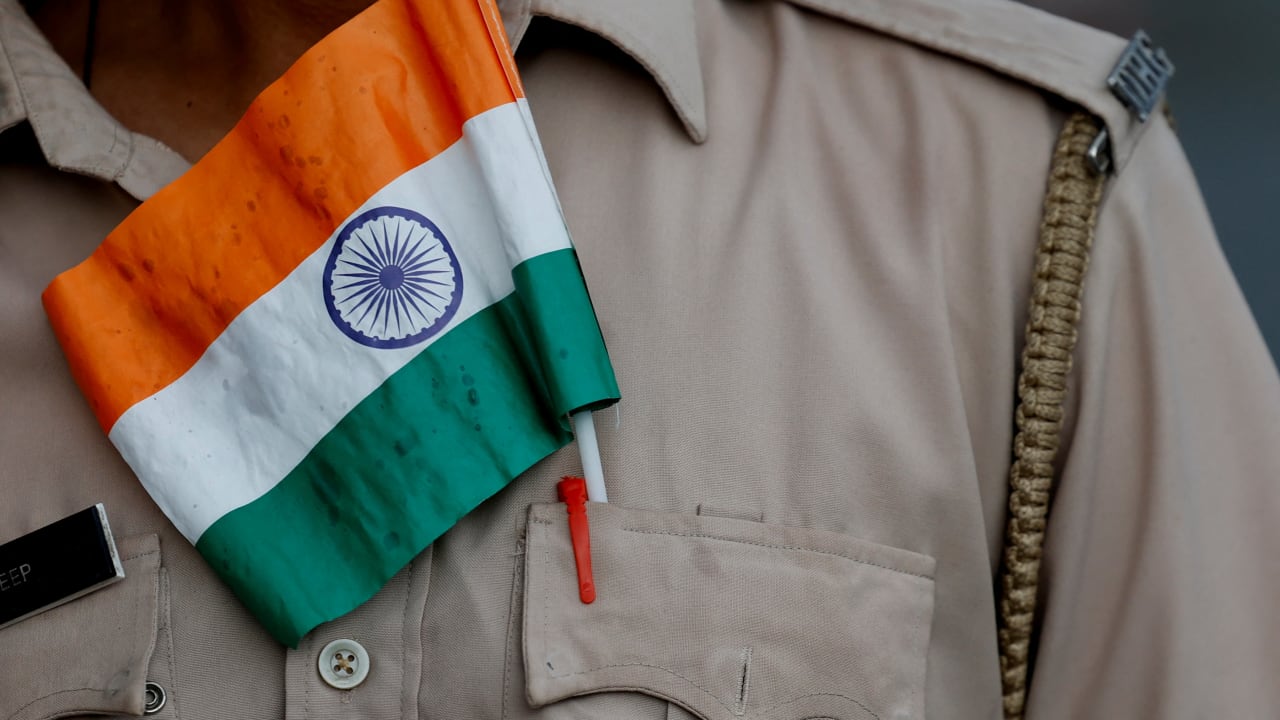
In May 2025, India launched Operation Sindoor, a limited yet symbolically charged military campaign against militant infrastructure across the Line of Control. Announced by Prime Minister Narendra Modi as a “clean and decisive operation”, it was framed not merely as retaliation for a terrorist attack in Pahalgam, but as a moral statement about India’s right and duty to respond. The operation revealed something larger than tactical success. It reflected a shift in India’s strategic culture, one where national security, ethics, and identity increasingly merge under what analysts describe as a doctrine of moral deterrence.
From restraint to moral assertion
For decades, India’s defense posture emphasized restraint and diplomacy over preemption. That began to change after the Uri (2016) and Pulwama (2019) attacks, followed by the Balakot airstrikes. Operation Sindoor continued this trajectory, signaling that India’s deterrence model is now guided as much by perception and legitimacy as by firepower.
According to Indian military briefings and open-source assessments, Sindoor targeted cross-border launch sites and logistic hubs used by terror groups in Pakistan-administered territory. Independent analyses, including pieces in War on the Rocks and Al Jazeera, suggest the scope may have extended to select Pakistani military installations, though official confirmation remains absent. The government’s messaging focused on precision, proportionality, and moral clarity rather than territorial gain, a deliberate contrast to the opaque wars of the past.
Technology and symbolism
While official statements have not detailed specific platforms used in the campaign, defense analysts note that Sindoor likely integrated stand-off precision systems such as cruise missiles, drones, and advanced surveillance tools developed under the iDEX and Make in India programs.
If correct, the operation marks India’s growing capacity to conduct joint, multi-domain strikes with indigenous technology an embodiment of Atmanirbhar Bharat, or strategic self-reliance. Still, the technological story was secondary to the message: that India’s force, when applied, must be seen as both capable and righteous.

The government’s portrayal of Sindoor as a “clean” operation echoed the language of the Rashtriya Swayamsevak Sangh (RSS), whose centenary in 2025 has had a profound influence on India’s security discourse.
The RSS and civilizational security
Founded in 1925 by Keshav Baliram Hedgewar, the RSS began as a social movement dedicated to “nation-building through character-building.” A century later, it has become the moral compass of India’s national self-image. Its worldview, that India (Bharat) is a civilizational entity rather than a conventional nation-state, underpins a new kind of security thinking: civilizational security, where defending borders and defending identity are seen as one and the same. This thinking informs Modi’s broader policies:
- Self-reliance (Atmanirbhar Bharat): technological and economic autonomy as moral independence
- Societal discipline: unity and service (seva) as pillars of resilience
- Civilizational diplomacy: cooperation without dependence.
The RSS’s current five-point program, Panch Parivartan (“Five Transformations”), articulates this fusion of ethics and statecraft. According to the organization's own publications and media coverage on RSS.org and NDTV, the framework includes: Samajik Samrasta (social harmony), Kutumb Prabodhan (strengthening family), Paryavaran (environmental stewardship), Swa (cultural self-reliance), and Nagrik Kartavya (civic duty).
Together, they form the moral subtext of India’s “whole-of-nation” approach to security.
Ambiguity and deterrence
Nowhere is this synthesis clearer than in India’s evolving nuclear discourse. While the official No First Use (NFU) policy remains intact, recent statements by senior defense officials have introduced nuanced flexibility not a doctrinal shift, but a recalibration of tone. Analysts read this as an effort to preserve strategic ambiguity without abandoning the moral posture of restraint.
In essence, India seeks to demonstrate that virtue does not preclude power. As one observer noted, India uses ambiguity not to evade responsibility but to retain manoeuvring space while sustaining the image of moral strength. Such ambiguity, when balanced carefully, becomes a strategic asset in itself.
Risks and rewards
The fusion of nationalism and security has made India’s strategic messaging clearer and its domestic consensus stronger. Yet it also introduces tension. When unity shades into uniformity, pluralism suffers. When morality becomes part of deterrence, it risks legitimizing exceptional measures in the name of righteousness.
Critics within India and abroad caution that the same moral confidence that empowers India could, if left unchecked, harden into strategic rigidity. Still, few would deny that the centenary of the RSS coincided with a moment of strategic coherence unmatched in decades. Under Modi, India’s moral vocabulary and military modernity now speak in tandem. For policymakers, the enduring question is whether that harmony can outlast the leader who forged it.
Conclusion
Operation Sindoor encapsulates the new face of Indian deterrence: technologically confident, morally assertive, and civilizationally self-aware. It symbolizes a nation striving to align its power with its principles. The challenge ahead lies in preserving moral confidence without constraining strategic flexibility, ensuring that conviction continues to guide, not govern, the Republic’s choices.