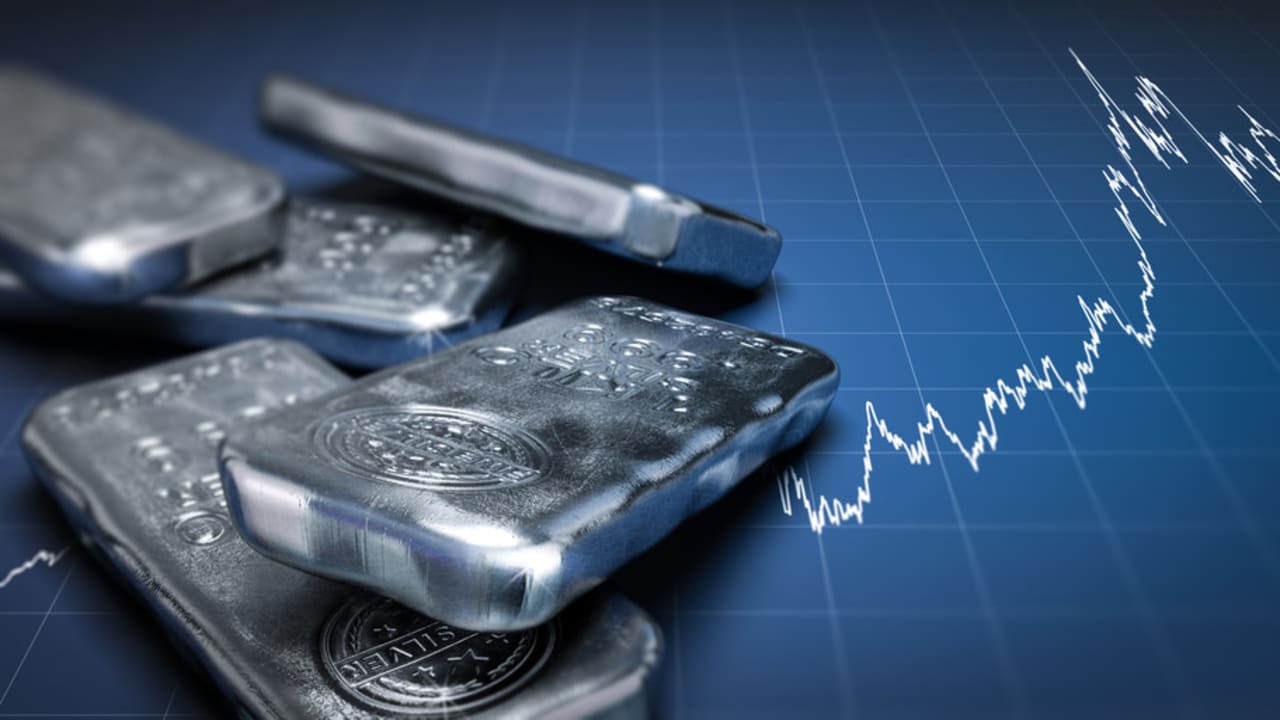
This Monday, December 1, the price of silver reached a new high, with the metal traded at $58 per ounce. The rally witnessed is believed to be driven by economic uncertainty, industrial demand, and tight supply.
Though recently the market has been closely watching the gold price, now silver is drawing attention. Since the beginning of the year, the price of white metal has almost doubled, marking its most robust performance since 1979 and outpacing the growth demonstrated by gold this year.
Several factors contributed to this climb. First, during periods of economic uncertainty, investors tend to shift toward safe-haven assets, such as silver. Its appealing position was even more strengthened as expectations of the Fed cutting rates by 25 basis points (bps) in December increased. The probability of this is now estimated at 87%, according to the CME FedWatch tool — as market confidence has been fueled by recent commentary from Fed officials — thus making silver more attractive as a non-yielding asset. Moreover, with the U.S. dollar weakening, the price of metal becomes more affordable for foreign buyers, further supporting demand and higher prices.
Second, industrial demand significantly influenced the metal’s price, as silver is used in areas such as solar panel manufacturing, electric vehicles, and electronics, which are projected to grow in the coming years. However, the market is tight, as supply is limited, with some of the producers even experiencing declines. Inventories in major warehouses, such as those linked to the Shanghai Futures Exchange, are at decade-low levels. Such an imbalance between demand and supply also impacts the price trajectory.
The metal was included in the list of U.S. critical minerals, underscoring its growing importance in the global economy. Given the potential for further tariff imposition on silver, market participants are closely monitoring statements regarding this question.
Therefore, silver’s price increase reflects a combination of structural industrial demand and strengthened investment interest, which differentiates it from gold, whose growth has been driven by investment demand rather than industrial use.
Currently, the market is wondering whether the metal will reach $60, given the momentum gained, which seems feasible. Some analysts suggest that the rally marks the beginning of a stronger trend for metal, with its price rising much higher than it already has.
Although short-term volatility may be expected due to the rapid increase, some experts argue that silver’s value will likely continue to rise due to growing industrial demand.
This article was written in cooperation with TRADINGVIEW