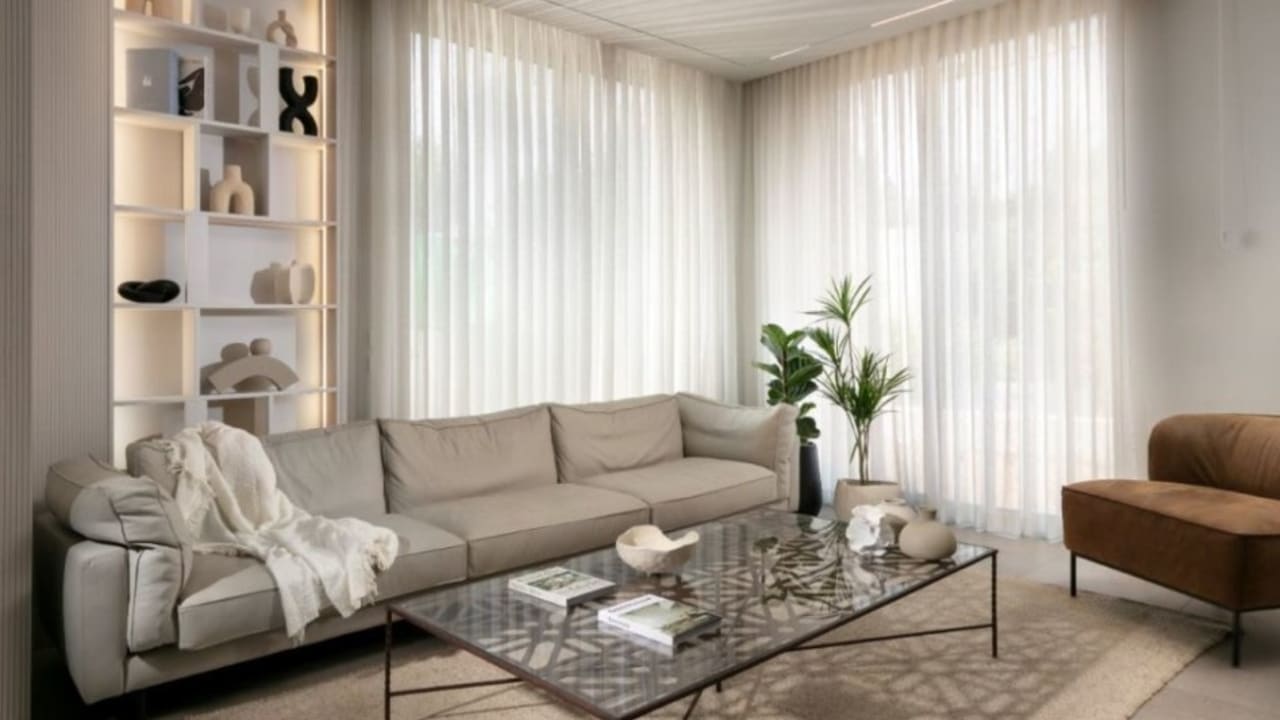
Autumn is a time of change. During this season, the light shifts, colors soften, and the home feels different. The transition between outdoors and indoors sharpens the need for balance, comfort, and an aesthetic that allows for calm. Color plays a central role in this process.
Hila Harel, the home designer for OKNIN, talks about color as a design tool that balances depth and softness. According to her, the autumn palette revolves around natural earth tones: Terracotta, beige, ochre, chocolate brown, and olive green.
“Warm-based colors suit almost any style,” Harel says, “and they blend beautifully with natural materials like wood, iron, and stone.”

Layers of Shades
Harel’s approach to design relies on layering shades. Instead of strong contrasts, she creates a gentle flow of color—light against dark, matte against glossy, rough against smooth. These layers give a space a sense of depth without overloading it.
For example, a floor in a natural stone tone complements wooden furniture in a warm shade, and linen fabric in a sand tone adds softness.
Continuity Between Indoors and Outdoors
It is important to emphasize continuity between indoors and outdoors, and Harel also approaches this through color. “Autumn colors allow for a dialogue between the home and the garden or balcony,” she explains. “Earth tones and deep greens look natural both inside and outside. When there is continuity in material and color, it creates a sense of flow and harmony.”

Autumn Touches in Small Details
The feeling of autumn can also be introduced through small details: Textiles with natural textures, warm-toned lighting fixtures, ceramic pieces in terracotta or smoked gold. Harel emphasizes that no major changes are needed to update a space—just adding the right single layer of color or material can transform the atmosphere.
The autumn color palette is flexible and timeless. It suits both modern and classic spaces equally, conveying balance and tranquility.
“The goal is to create a sense of ease,” Harel says, “one that is based on proportion, texture, and tone, not on drama.”