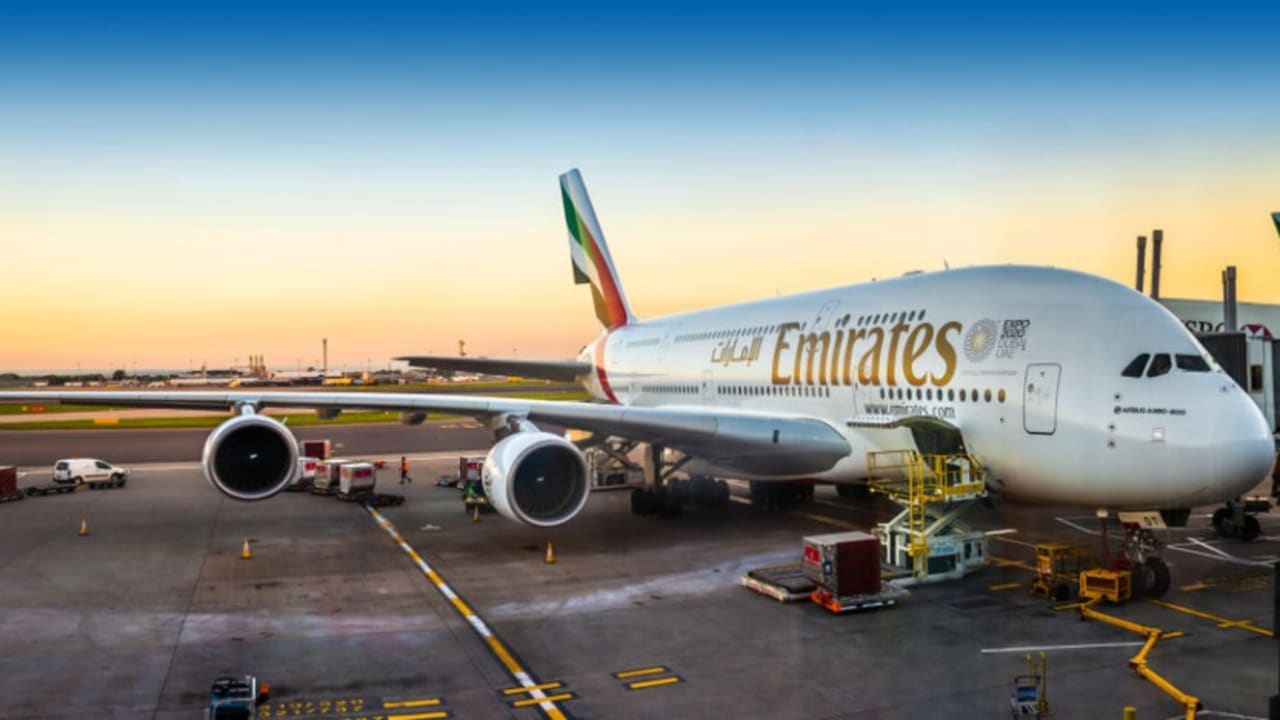
Emirates, one of the world's leading airlines, has announced that it will continue operating its massive fleet of Airbus A380 aircraft—the largest commercial plane in the world—until the end of the next decade. This is an unusual decision in the aviation industry, where most airlines have already retired this jumbo model due to its complex maintenance and high operating costs.
In a statement made at an aviation conference held in New Delhi, Emirates President Tim Clark announced that the company is currently working on a redesigned first-class cabin for the aircraft, which will include additional innovations aimed at preserving the A380’s prestigious status in the coming decade. “Like a hotel, we must constantly renew and upgrade,” Clark said, adding that the design is still on the drawing board.

The double-decker aircraft from European manufacturer Airbus has over the years become a symbol of luxury and size, thanks to its enormous dimensions and the amenities it offers passengers. Emirates, which owns more than 100 of these aircraft—the highest number in the world—is currently upgrading the plane to offer a flying experience that includes four classes: First, Business, Premium Economy, and Economy. In the First Class, the aircraft is equipped with fully private suites, personal showers, and dedicated personal service, while in Business Class, passengers can enjoy a shared bar on the upper deck.
Despite the love many passengers have for the giant aircraft, most airlines have abandoned it in recent years. Airbus itself announced back in 2019 that it would stop producing the plane, due to low order numbers and high operating costs. A380 planes consume vast amounts of fuel and require special infrastructure at airports, which led many airlines to switch to more efficient models like the Airbus A350 or the Boeing 787.

However, Emirates believes that the aircraft is still relevant—and above all, profitable. The plane has become a key asset in the airline’s dominance of long-haul flights around the world, thanks to its ability to transport hundreds of passengers comfortably and efficiently on long routes. “Our passengers love this aircraft, and we intend to continue investing in it,” Clark emphasized.
The uniqueness of the A380 lies not only in its size: It can carry up to 850 passengers in a dense configuration, but also in its engineering design. It is a four-engine aircraft, with high power output, and an exceptionally long flight range. Thanks to its design, it is quieter than usual, takes off and lands with impressive stability, and offers passengers a fundamentally different experience than any other plane. The quietness of the upper deck, the altitude above ground during flight, and the layout that allows for generous space—all contribute to an exceptional flying experience.

Looking ahead, while most airlines are turning to smaller and more efficient planes, Emirates is choosing to stand out. While Boeing focuses on its 777 and 787 models, promising operational efficiency, Emirates is banking on the uniqueness that the A380 offers—especially on intercontinental flights. In doing so, it represents a different path in the modern aviation landscape—a path that impresses not only the eye, but also the feet, with every step taken on the upper deck of Dubai’s flying hotel.