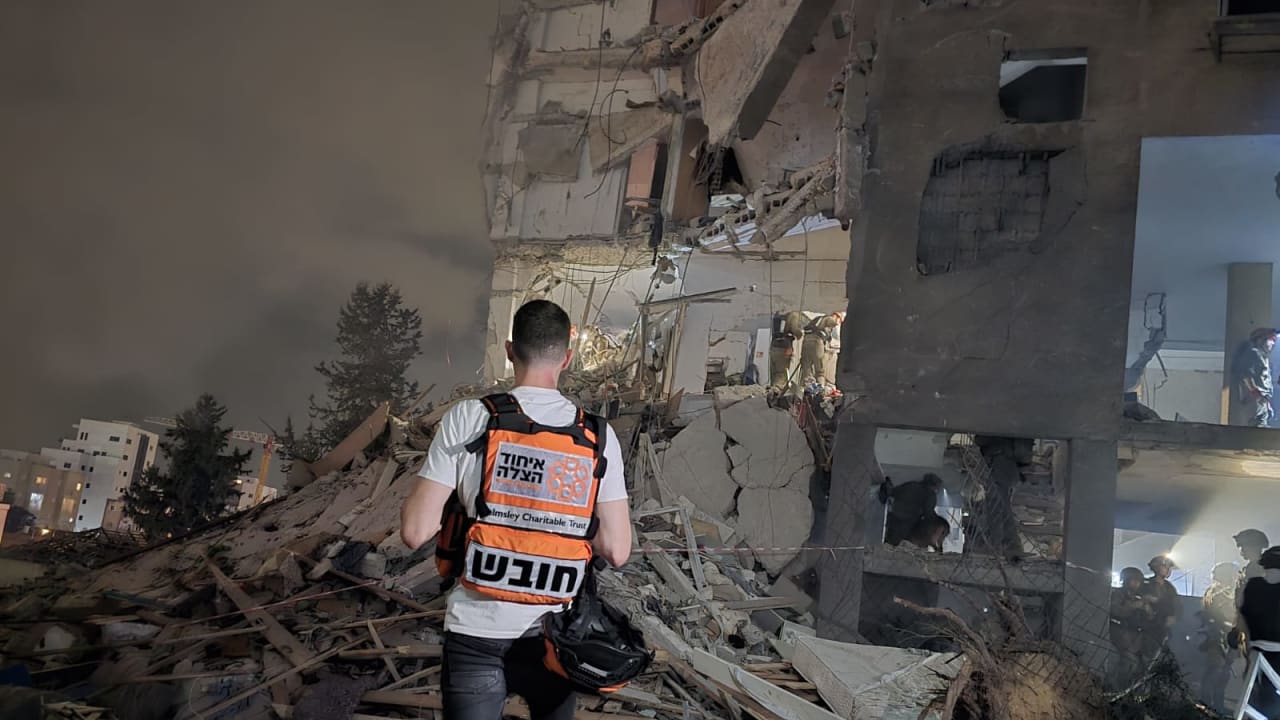
Thousands of residential properties across Israel are unfit to live in due to missile hits during the Israel-Hamas War and Operation Rising Lion against Iran. That is, besides the hostages, casualties, and atrocities inflicted by Hamas, Hezbollah, and the Houthis.
On June 26 and August 14, the government published guidance for Israel’s latest wave of homelessness. The guidance deals with two issues: compensation toward temporary accommodation; and tax relief for the sale of a home unfit to reside in.
Compensation toward temporary accommodation
Immediately following an attack, evacuation to a hotel or apartment could be made by a municipality and paid for by the government’s compensation fund. If the evacuees make their own arrangements, such as moving in with other family members, up to NIS 4,000 would be paid for evacuation of up to two weeks.
What now? An evacuee who finds a similar apartment to rent can present the rental agreement to the government’s compensation fund. If approved, the fund will finance the rental cost, having regard to size and location, which is preferably nearby. Moving into safe homes through efforts like apartment swaps was one option offered to displaced residents
If the evacuees want to stay in a hotel or other accommodation, it requires approval of the compensation fund and the local municipality.

If the evacuees made their own arrangements, such as moving in with other family members, they may receive monthly cash compensation as follows: single person, NIS 4,000; couple or single parent, NIS 5,000 (NIS 500 for each child, NIS 1,000 for each additional adult). The cash compensation, however, is capped at 80% of the cost of a similar apartment in regard to size and location.
Tax relief for sale of a home unfit to reside in
The Israel Tax Authority announcement of June 26 refers to buildings that were destroyed or became uninhabitable due to external events beyond the control of their (former) residents, e.g., due to missiles or earthquakes. In such cases, the property may still be regarded a “residential unit” for the purposes of obtaining a tax exemption applicable to urban renewal, i.e., “relocation during reconstruction” (pinui binui) or “Tama 38” (anti-earthquake strengthening) (Jerusalem Post).
If a building is declared destroyed or unfit, residents retain their tax-relief rights when selling homes to an urban-renewal developer, subject to signing a sale agreement with the developer within a limited period of time after the building is demolished, depending on the circumstances and subject to the other conditions in the tax law.
The limited period of time is one year. It is not yet clear whether the one-year time limit will be applied to war destruction cases or whether more time might be allowed. This matters because whole areas were affected, and rebuilding will take time to organize.
Update for landlords
The ITA announcement of August 14 reinforces and clarifies a few matters.
In particular, the property compensation fund may pay compensation to owners of private homes and commercial property, such as shops and warehouses, that were directly hit as a result of the war if certain conditions are met, including: the property was rented out on the day of damage or up to three months before then; because of war damage, the property became unfit to occupy for at least a month; no rent was paid during the repair period.
Monthly compensation is claimable online for the repair period. Documents must be attached. A three-month deadline applies. If the tenant keeps paying the rent, the landlord is not eligible for compensation. This presumably refers to rent prepaid by tenants (monthly checks or a bank standing order).
The words “directly hit as a result of the war” presumably refers to Iranian missiles that hit one building and sent shock waves that caused severe damage to other buildings in the area (Jerusalem Post).
Comment
John Lennon sang “Give Peace A Chance.” Israel did and wasn’t ready for anything else when the October 7 massacre took place. Perhaps the sad Beatles’ ballad “She’s Leaving Home” is more appropriate?
As always, consult experienced tax advisers in each country at an early stage in specific cases.
leon@hcat.co
The writer is a certified public accountant and tax specialist at Harris Consulting & Tax Ltd.