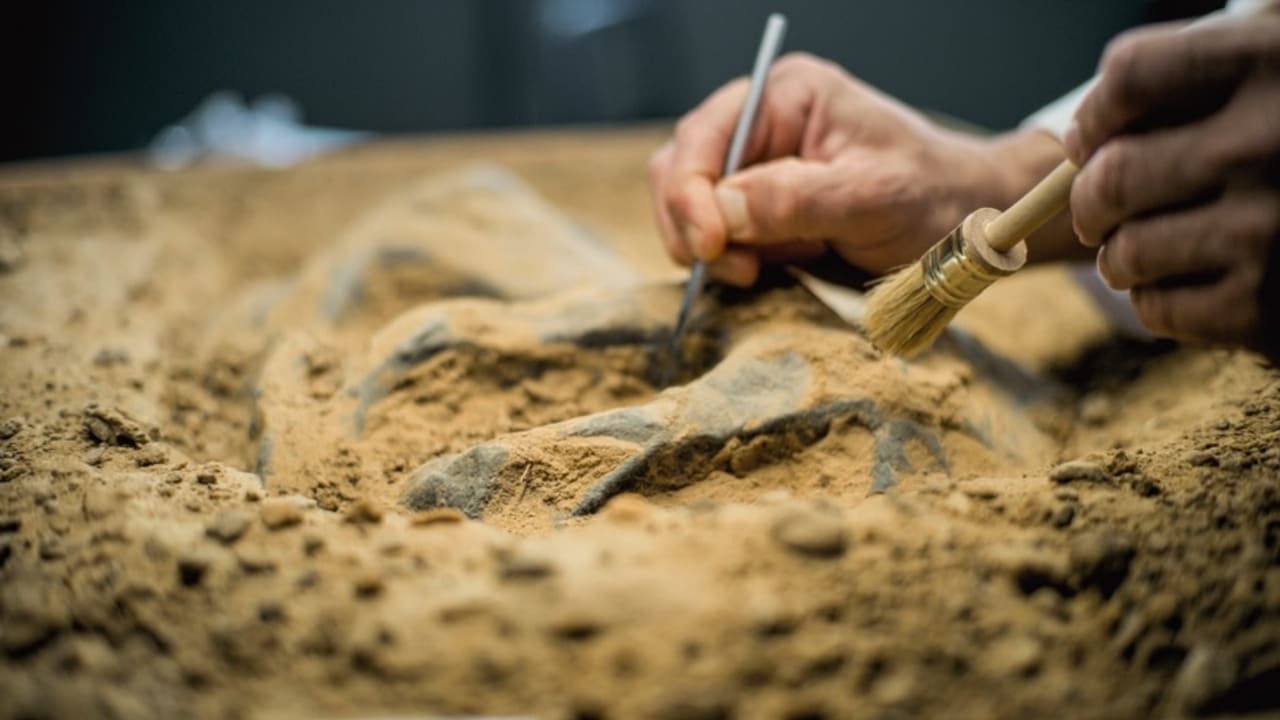
Archaeological digs on Peru’s central coast indicated that the Caral civilization, once thought to have vanished after an extreme drought, reorganized along the Pacific shoreline. Excavations at Vichama and Peñico revealed temple pyramids, sunken plazas and reliefs that recount a migration dating to roughly 4,200 years ago.
Peruvian archaeologist Ruth Shady stated that a severe drought drove inhabitants from the inland city of Caral to these coastal settlements, where they relied on fishing and crops grown in the Huaura River valley. She added that the migrants reproduced their inland architectural style in their new homes.
At Vichama, three-dimensional murals displayed emaciated figures, pregnant women, ritual dancers, two large fish and a frog-headed figure struck by lightning. “The frog represents water… the arrival of lightning means the return of rain and fertility,” said Shady, according to Sozcu. She argued that the images served as “a kind of warning to future generations” about climate threats, referencing the 4.2-kiloyear drought that also affected societies in Mesopotamia and the Indus Valley.
Peñico, about 16 kilometers east of Caral and dated to 1800–1500 BCE, contained 18 monumental and residential structures arranged in a layout echoing the original city. Chief archaeologist Mauro Ordoñez observed that the design indicated careful civic planning and found no evidence of warfare. Food remains included Pacific fish, cotton, sweet potato, avocado, corn, pumpkin and chili pepper, while Ecuadorian shells pointed to coastal-Andean-Amazonian trade networks.
Animal bones supplied further proof of long-distance ties; monkey and macaw skeletons appeared in ritual contexts beside ceramics depicting the same creatures. Burnt-clay figurines portrayed high-status men and women with red-painted faces and stylized hair, details that researchers interpreted as signs of gender parity.
Reliefs of pututus—conch shell trumpets still used in Andean ceremonies—adorned Peñico’s central plaza, underscoring cultural continuity between the coast and the earlier highland capital.
“The Spaniards considered that this was not a civilization… but recent investigations show that neither writing nor the wheel were necessary to achieve a complex society,” said Tatiana Abad, chief archaeologist at Vichama, according to SAPO.
“Now, the evidence shows that in the face of a climatic crisis, the civilization did not disappear but adapted and moved,” said Shady, according to SAPO.
The preparation of this article relied on a news-analysis system.