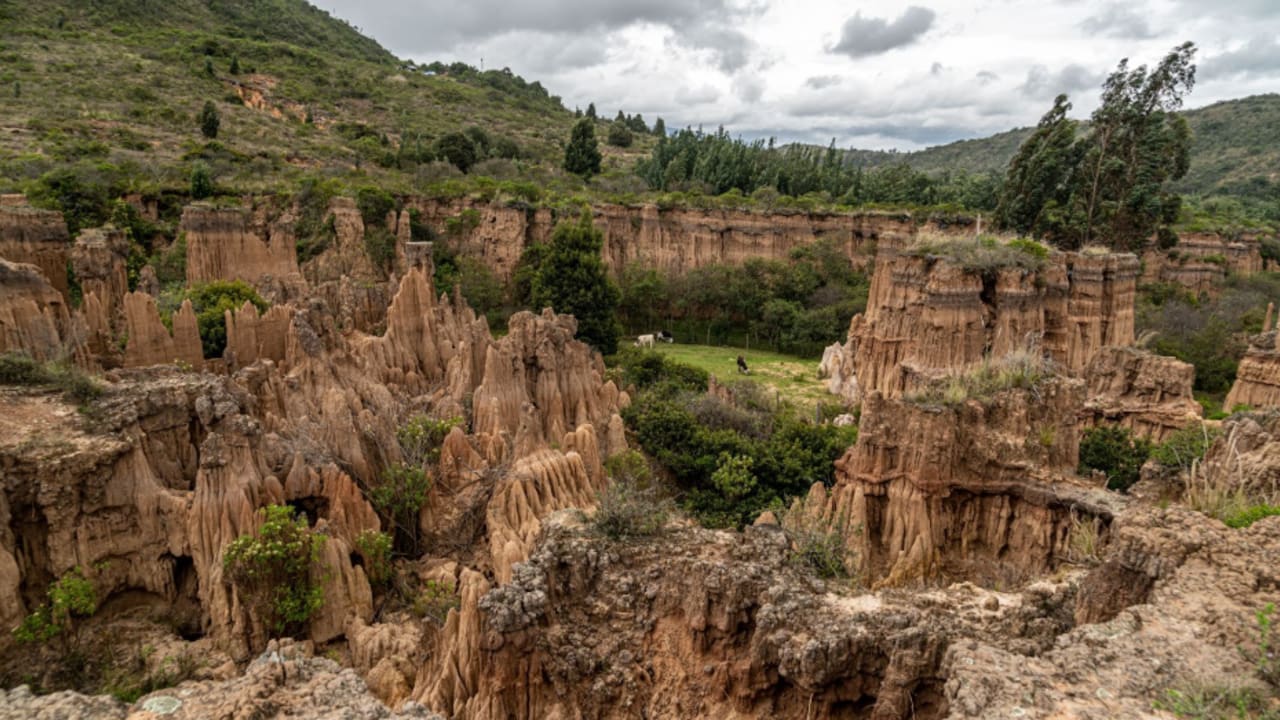
A new analysis of ancient DNA from 6,000-year-old hunter-gatherer skeletons at the preceramic site of Checua near present-day Bogotá, Colombia, revealed a previously unknown genetic lineage and marked the first time complete genomes were sequenced in ancient samples from Colombia, a finding that could rewrite human history, according to Naftemporiki.
The lineage, named Checua after the area in the municipality of Nemocón where the remains were excavated in 1992, traced to people who lived about 6,000 years ago and vanished from the genetic record roughly 2,000 years ago, possibly due to incoming migration. The discovery included partial remains of about 30 individuals, with one skull preserved almost completely.
“When we started to compare with other individuals from other parts of the Americas, we found that the individuals from the Pre-Ceramic Period found here in the Cundiboyacense plateau have a lineage that hasn't been reported. It's a new lineage,” said Andrea Casas Vargas, a researcher at the Institute of Genetics of Unal.
Researchers generated seven genomes from Checua dated to about 6,000 years ago; six were complete enough to be integrated into a broader project that included remains excavated between 1987 and 2003. The Checua remains had not had their genomes fully sequenced before.
Other remains in the project shared genetic commonalities with remains found in Panama and reflected groups that migrated through Central America and Colombia as populations moved south from the Bering Strait about 20,000 years ago. Checua showed no genetic kinship with those migrants and differed from other prehistoric communities in the region.
Newsbomb reported that DNA analysis found the Checua were genetically unlike modern humans. The remains carried genetic signatures that may derive from the first humans to reach South America, who diverged early and remained genetically isolated for thousands of years and are now extinct.
“It is likely that the group represents an isolated, nomadic community of hunter-gatherers,” said Casas. She said the group might have died out because of climate conditions, disease, or lack of food.
Skulls were much more elongated than those of other populations around Bogotá, and abscesses in the upper front jaws suggested tooth loss due to infection, said José Vicente Rodríguez Cuenca, a physical anthropology expert.
Volcanic eruptions likely destroyed surface crops and pushed early populations to consume root plants such as potatoes and tubers, which may have led Checua groups to focus on underground crops.
The results offered new information on prehistoric migratory movements in South America, indicating that migration occurred in successive and spaced waves rather than a continuous descent from Asia. The dominant view holds that early settlers crossed from Siberia into North America via an Alaskan ice bridge roughly 20,000 years ago, and some studies suggested later colonization of parts of the continent by Polynesian groups.
“We work with the remains that are available. Perhaps in a few years we’ll find other remains and they will shed some light on this lineage,” said Casas. “They have no known descendants,” she said.
Assisted by a news-analysis system.