
Every single oleh (new immigrant) - without exception - will commiserate with you about Israeli bureaucracy when making aliyah (and long after). Just mention the word bureaucracy, and you’ll be met with an empathetic nod and a knowing smile. While these may seem like minor hurdles in the grand scheme of things, these daily bureaucratic obstacles can really take a toll on new immigrants who are trying to find their footing in a new country.
In this week’s column, I’ll share some relatable stories from olim navigating the infamous maze of Israeli bureaucracy, alongside some support systems that can help. My hope is to reassure others - although frustrating and often maddening, these challenges can be overcome.
Let’s talk about the dreaded Misrad HaPnim (Interior Ministry) - arguably the most feared institution among new olim, and with good reason. Many will tell you it’s the bane of their early aliyah experience. Below are just three stories (among countless others) that illustrate the frustrating reality of simply trying to obtain a visa or passport.

Chaya’s story: the passport photo debacle
Having recently made aliyah from Melbourne and now residing in Jerusalem, Chaya, a young olah, shared her ordeal trying to procure an Israeli passport. After an initial failed attempt in which Misrad HaPnim rejected her passport photos, Chaya went back this time armed with new, supposedly correct photos - only to be turned away again. What followed was a series of back-and-forth visits, with each new set of photos being rejected for various baffling reasons.
On one attempt, after arriving fully prepared (again), Chaya was told that the clerk was on lunch break. When the clerk finally returned and reviewed her documents, it turned out Chaya had had the right photos all along. Reflecting on the absurdity of the situation, she noted:
“Apparently, the Misrad HaPnim clerk’s hanger (hunger-induced anger) determines your visa status. Note to self: only go after lunch.”
Elana’s story: the six-visit saga
Elana Muller, a young woman from the US, decided she wanted to be financially stable before officially making aliyah, so she planned to work in Israel for a year beforehand. Upon arrival, she booked an appointment at Misrad HaPnim to request a work visa. Advised to get there early because of the infamous long lines, Elana awoke at the crack of dawn and arrived at 7 a.m., well before opening. Still, she waited in line for hours.
Prior to making the appointment, Elana had carefully researched the documents that she would need. Yet when she finally reached the desk, she was told she needed a letter from a rabbi to prove she was Jewish—despite reminding the staff that a person doesn’t need to be Jewish to work in Israel, only to make aliyah.
Still, she complied. Several weeks later, Elana returned with the requested letter, only to be told she now needed copies of her parents’ passports. When she questioned why this wasn’t mentioned earlier or at her last appointment, the staff curtly replied, “Why didn’t you ask?” to which Elana pointed out (correctly) that this requirement wasn’t listed on the website and seemed irrelevant to getting a work visa.
Nevertheless, she returned again with copies of her parents’ passport photos. This time, she was told she needed her own passport photos. Could they scan the photo from her passport? she asked. No, they insisted. She needed official passport photos.
And so Elana returned once more with the photos in hand - only to discover that the offices were closed that day and that she’d have to come back again. Finally, on her fourth visit, she handed in all her documents and was told she'd receive a call in two weeks. So she waited two weeks. And another two weeks. After four weeks and getting no response, Elana returned for the fifth time—again at the early hours of dawn—only to be told that the woman handling her case wasn’t there, that no one else could help her, and to go home.
On her sixth visit, she was told the same woman was on vacation. At this point, Elana had had enough.
“It’s been five weeks,” she said firmly, “and I’m not leaving without my visa.”
Eventually, after running around from clerk to clerk and waiting in multiple lines, she found someone who—within five minutes—discovered that her visa had been ready the entire time. Astounded, Elana shook her head in disbelief that it had taken her six attempts and many weeks to get her visa!
Devorah's battle for benefits
After making aliyah, Devorah, a young South African olah, was told that even if she gave birth in another country, her baby would still be eligible to receive the aliyah benefits upon returning to Israel. But after finally getting an appointment with Misrad Haklita (Aliyah and Integration Ministry), she was told that her baby was in fact not eligible for said benefits. In frustration, Devorah recounted: “Everything is just a fight. There is nothing straightforward. Everything is a fight with them.”
When asked how they eventually overcame these challenges, all olim emphasized that they couldn’t have done it without the support of friends and organizations dedicated to helping new immigrants.
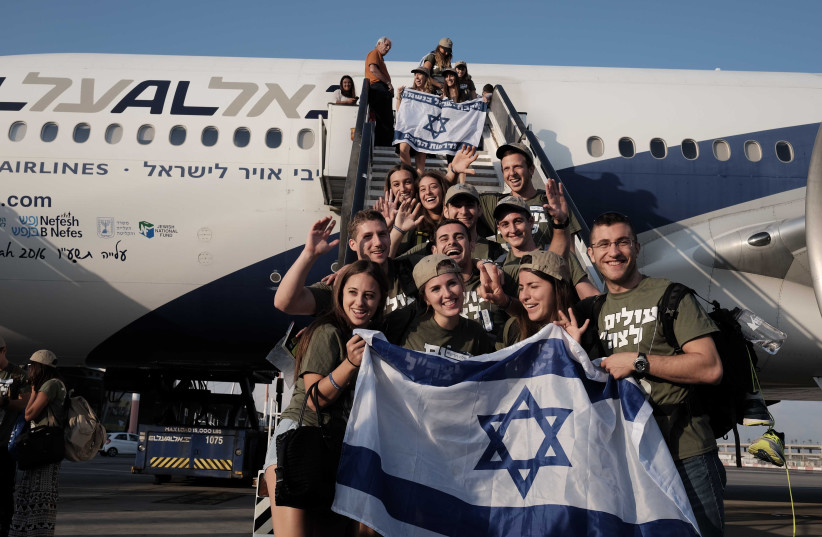
Despite the frustration, these stories remind us that while Israeli bureaucracy can be infuriating, it’s also deeply unifying - an experience every Oleh shares, laughs about, and eventually conquers. And thankfully, support systems for olim like Nefesh B’Nefesh for Americans, Telfed for South Africans and Australians, and Chaim V’Chessed (see links to their websites below), as well as Facebook groups and local absorption centers, exist to help navigate the chaos.
Because yes, it’s hard. Yes, it’s frustrating. But yes - it’s also absolutely possible.
https://www.nbn.org.il/your-first-steps-after-making-aliyah/
https://www.nbn.org.il/your-first-steps-after-making-aliyah/#sixsteps